


NEW YORK – Stephen King has a rule for anyone wanting to adapt one of his books for the big or small screen. It's basically the Hippocratic oath for intellectual property — first, do no harm.
“When you deviate from the story that I wrote, you do so at your own risk,” he says in a recent interview from his home in Maine. “I know what I’m doing and I’m not sure that screenwriters always do or that producers and directors always do.”
Recommended Videos
Not everyone has listened to King, who has enjoyed hit adaptations — “The Shawshank Redemption,” “Stand By Me,” “Misery,” “It” and “The Shining” — as well as flops — “Salem's Lot,” “Graveyard Shift” and “The Lawnmower Man.”
The industrious novelist has lately watched as a wave of adaptations are crafted for theaters or streaming platforms, a list that includes “The Life of Chuck” and the upcoming “The Long Walk,” “The Running Man” and “It: Welcome to Derry.” It also includes the eight-episode series “The Institute,” which debuts on MGM+ on Sunday.
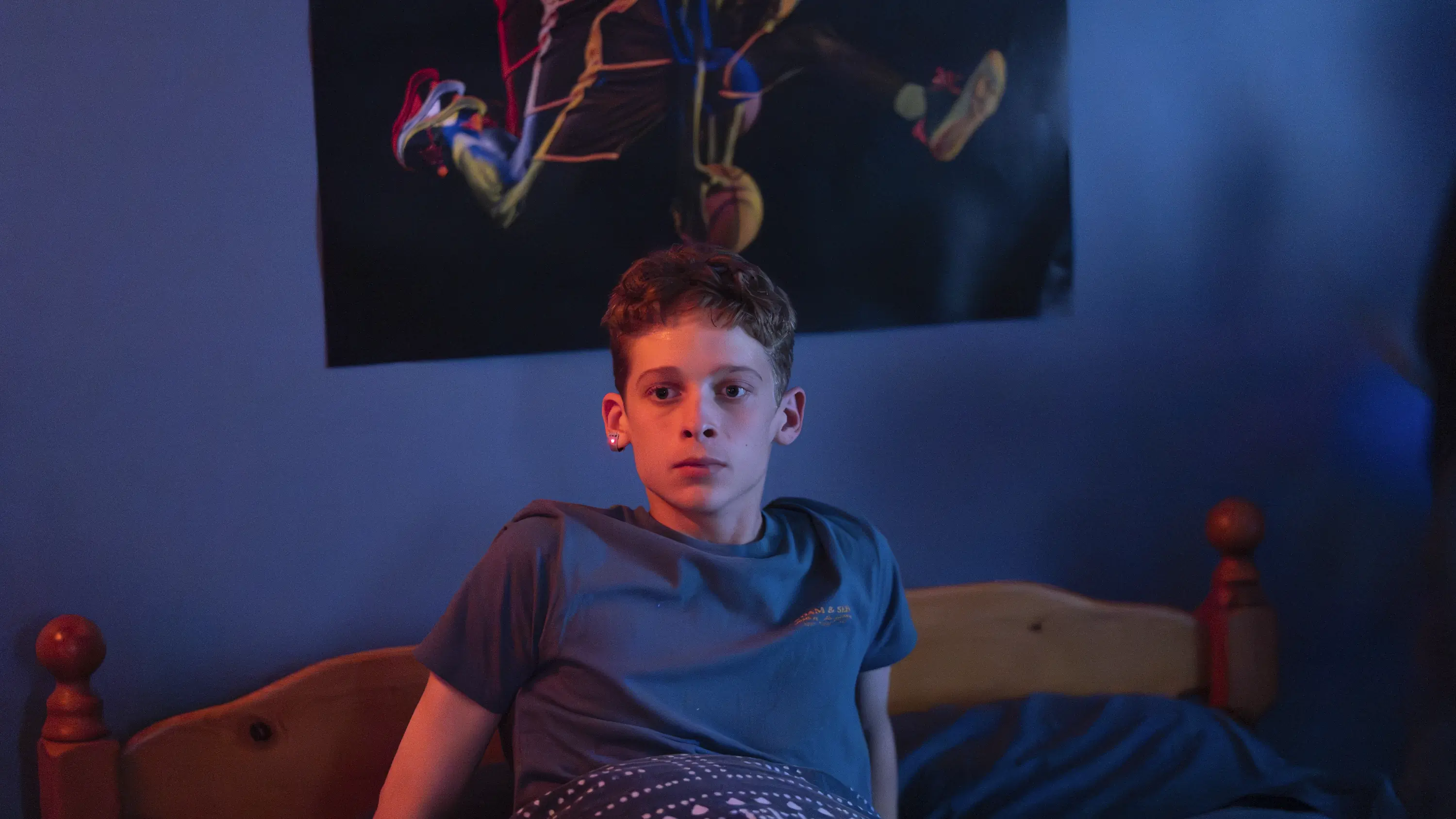
It's about a secret government facility where kids with special talents — telekinesis and telepathy — are imprisoned and put to dark geopolitical uses. Their bedrooms are faithfully re-created and creepy posters — “Your Gift Is Important” and “I Choose to be Happy” — line the halls.
Does this small-screen adaptation of his 2019 book get King's approval? “I’m talking to you which is a pretty good sign,” he says, laughing. He even signed on as executive producer.
“When I write a book, it’s a single-person sport and when these people do a TV show or a movie it becomes a team sport. So you expect some changes and, sometimes, man, they’re really good.”
What's 'The Institute' about'?
“The Institute” stars Mary-Louise Parker as a sinister scientist and Ben Barnes as a small-town cop on opposite sides as the group of children are kidnapped and exploited. The series is faithful to the book, but includes some changes, like setting it entirely in Maine and aging the hero up so as not to appear too sadistic.
That hero — 14-year-old Luke Ellis, played winningly by Joe Freeman — is the latest youngster with special powers that King has manifested, a line that stretches back to the heroine of “Carrie,” Danny Torrance in “The Shining” and Charlie McGee in “Firestarter.”
“I thought to myself, what would happen if a bunch of kids that had psychic powers could see enough of the future to tell when certain moments were going to come along,” he says. “But the kids would be wrecked by this process and they would be kept in a place where they could serve the greater good. It was a moral problem that I really liked.”
King has a special respect for young adults, who he says can be brave and behave nobly under pressure but who can also be mean and petty.
He says he was inspired by William Golding, who wrote the iconic “Lord of the Flies,” a dystopian novel about a group of schoolboys who while trying to survive on a remote island unlock their own barbarism.
“He was talking to his wife before he wrote the book and he said, ‘What would it be like if I wrote a story about boys and the way that boys really acted?’ And so I tried to write a book about kids the way that kids really act,” says King.
Executive producer and co-writer Benjamin Cavell says King resists the impulse to be overly involved in the process, instead identifying people he trusts to do right by the material.
“So much of the pleasure of King’s writing is the access he gives his reader to the deepest, darkest, most private thoughts and dreams and desires of his characters; the adaptor’s task is to make all that external and cinematic,” says Cavell.
‘Monsters inside of us’
Jack Bender has become something of a King whisperer, helping adapt both King's “Mr. Mercedes” and “The Outsider” to the screen. This time, he helped direct and executive produce “The Institute.”
“I count my blessings to be in the position of someone he creatively trusts,” says Bender. “He is a genius at tapping into the fears we all share of what’s hiding under our beds. For me, both ‘Mr. Mercedes’ and ‘The Institute’ deal with those fears by focusing on the monsters inside of us human beings, not just outside in the world around us.”
The first thing Bender and Cavell had to figure out was what form “The Institute” would take — a standalone film or a series.
“In the case of ‘The Institute,’ which was a 576-page novel packed with rich, fascinating characters that would need time to connect and be with each other, I didn’t want to shrink it into a 110 minute movie that would’ve become the 'X-Kids,'” says Bender.
King says that while Hollywood has a seemingly insatiable appetite for his books, he hasn't gotten more cinematic as a writer — he always has been.
“I am one of the first writers that was actually influenced by television as well as movies. “I grew up with the idea that things should be cinematic and that you should look at things in a visual way, a very sensory way.”
King was also pleased that the adapters of “The Institute” made sure not to change the name of Barnes' small-town cop, Tim.
"I named him Tim because I read somewhere that no great thing was ever done by a man named Tim. And so I thought to myself, ‘Yeah, well, OK, I’ll call him Tim and he can do great things.’”