
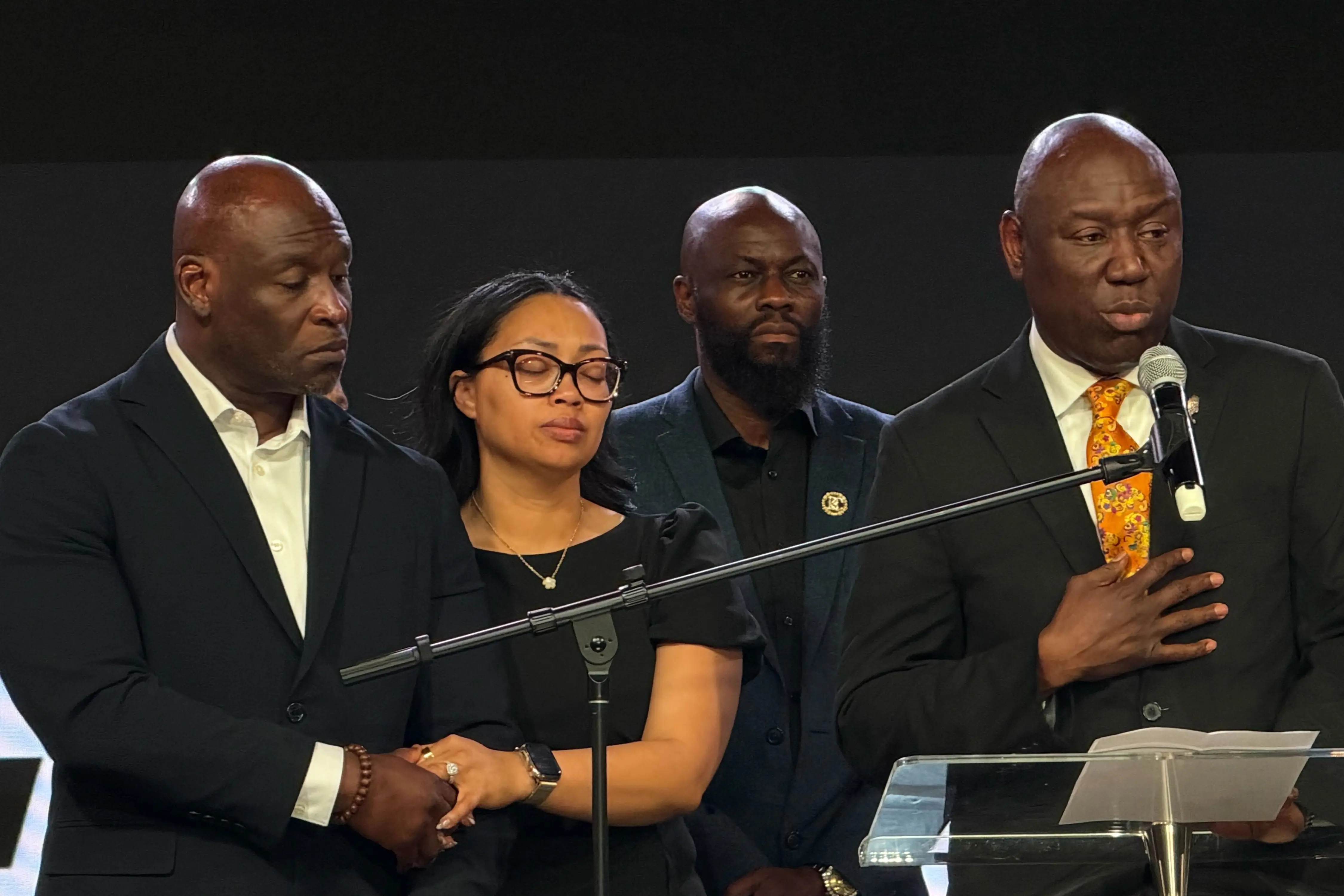
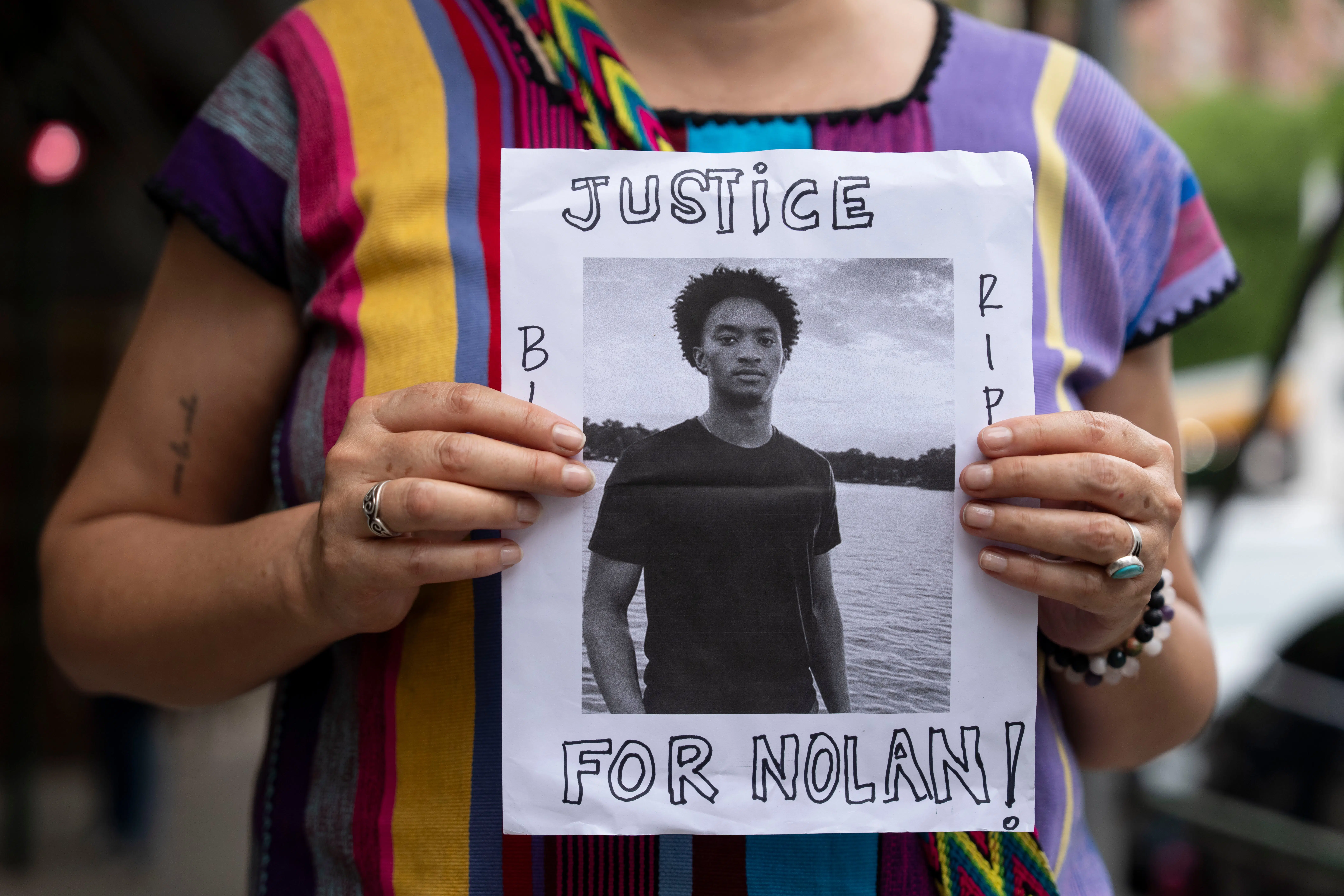
JACKSON, Miss. – Civil rights attorney Ben Crump released information from a forensic examination of Nolan Wells’ cellphone as well as details of the official autopsy Thursday, just days after a Mississippi grand jury declined to recommend anyone be charged in the teen's death.
Attorneys representing the 18-year-old Black college student's family have called for transparency, asking that the grand jury investigative materials and the official autopsy report be publicly released. Crump and his team discussed the contents of the cellphone analysis, even reading a few Snapchat messages out loud, but they did not release a full report of all the messages sent and received in the days before Wells' death. It was announced late Monday that a grand jury did not find evidence of criminal conduct.
Recommended Videos
The grand jury had been given access to that information, including 282 pages of Snapchat conversations, when it convened last week, according to the panel's report and Crump's release Thursday. Crump said the forensic examiner was able to track messages received and sent and tie them to the location of Wells' phone from the day before he went missing all the way up to when his family regained possession of his phone.
“The messaging, as I said, was very telling … some of his own friends were concerned about (how) people on Horn Island can be racist,” Crump said Thursday.
Wells' family and their legal team have slammed the grand jury report and have been working to keep the investigation open and active. They've asked for federal authorities to look into the events around Wells' death. His body was found two days after he went with a group of mostly white friends on a boat trip to a barrier island for a July 4 party.
The high-profile death in a Deep South state with a history of racial tension has sparked rampant speculation and suspicion. State and local officials and several of Wells' white friends who had become the target of that speculation had hoped that the grand jury report would quell critics.
Wells' parents and lawyers express suspicions
Wells’ parents and their lawyers voiced suspicions after Wells’ friends left the island without him, saying he wanted to stay behind and talk to a girl. Wells’ phone was on the boat that took him to the island, and his family and their attorneys have expressed doubt that he would choose to stay behind without his phone.
Crump said the last text message sent by Wells was July 3 around 8:30 p.m., but that was not unusual given that he and many teenagers communicate primarily on social media, including Snapchat and on Instagram.
Andrew Garrett, the forensic examiner who extracted the contents of Wells' phone, said the GPS and other phone data showed that Wells had opened it with his face while it was on the boat around 2:17 p.m. It was then locked and continued to receive messages as it traveled on the boat then by car and eventually was reclaimed by his family.
Garrett also said at the news conference Thursday that some snap messages had been deleted. He did not specify whether the senders deleted those messages on their own phones, but he made clear that he could not ascribe intent to those deletions. There was no evidence presented showing someone had unlocked Wells' phone after it left the island and before the family took possession.
The Associated Press sent a message to Crump's team seeking clarification Thursday.
A lawyer who represents some of Wells’ friends who have been the subject of speculation and online hate said it was unclear what new information the cellphone report revealed, reiterating that none of his clients were on the boat carrying Wells’ phone.
“They never had the phone,” attorney Edward Paltzik said of his clients.
A number of the grand jury's written findings appeared to attempt to dispel those suspicions, such as saying they found Wells chose to stay behind, that leaving on different boats was common on crowded days on the island and that it wasn't unusual for phones to be left on boats and eventually returned on the mainland.
The grand jury findings attempt to explicitly clear the friends who left the island without Wells from any wrongdoing, including trying to squash several online rumors.
A lawyer representing several of the friends said the report had lifted a weight from his clients.
Lawyers question drowning determination
The report said the grand jury found Wells' death to be “consistent with drowning” and found that he had not been in a fight or altercation while on the island.
Crump and Wells' parents questioned how the panel could determine Wells drowned, when both the official and independent autopsies said the cause of death could not be determined. They said both also noted that Wells had unexplained blunt force trauma on the back of his head.
Crump and attorney Liza Park discussed the official autopsy report that they obtained Wednesday night, noting again the fresh bruising on Wells' head. Park also quoted the report saying his airways and stomach were empty, raising questions about how the grand jury found he had likely drowned.
“What this means is that there is no water in the stomach, there is no water in the lungs and there is no water in the throat,” Park said.
A witness testified to the grand jury that he saw Wells slip awkwardly off the side of a boat around 3:30 p.m. on July 4, but that Wells continued to socialize after the fall and didn’t appear injured, the report said. The panel said it couldn’t determine whether the fall caused the bruising on Wells’ body, but noted the bruising was not a fatal injury.