
A new legal challenge to Texas’ school funding system renews questions about what methods state leaders should use to ensure students in low-income districts and those attending campuses in more affluent communities receive an education on a level playing field.
The Midland school district voted to sue Education Commissioner Mike Morath and state leaders this week, focusing on a piece of Texas’ school finance system known as recapture or “Robin Hood.” Texas courts have repeatedly found recapture in compliance with the state constitution — in 1995, 2005 and 2016, respectively.
Recommended Videos
But the latest challenge from West Texas represents decades-long frustrations Texas schools hold with state leaders’ approach to paying for public education. Despite new dollars approved last year, many districts have closed schools, shuttered programs and cut staffing in response to a funding crisis they say the Legislature helped cause.
Here’s what to know.
What is recapture?
Recapture, often referred to as “Robin Hood,” passed into law in 1993 after the predominantly Hispanic and low-income Edgewood school district and dozens of other underfunded campuses sued Texas over significant disparities between the resources students in their communities received and kids who attended school in affluent neighborhoods.
Under recapture, school districts that receive more local property tax revenue than their state-determined need must send excess funds back to the state. The state then redirects that money to districts that struggle to generate local funding.
During the 2024–25 fiscal year — the most recent with finalized data — 225 districts sent nearly $3 billion back to the state, according to data from the Texas Education Agency. That’s up from just over $1.4 billion a decade prior.
How much is recapture costing districts?
As districts’ local economies have grown, so has their property wealth — resulting in more districts sending money back to the state.
In 1994 — the year after recapture passed into law — 34 school districts redistributed $131 million through the system, many of them in Texas’ wealthy suburbs, according to the Texas School Coalition, an organization advocating on behalf of recapture districts.
Since then, districts have sent roughly $45.5 billion in total recapture funds to the state — including those located in urban communities with high numbers of students in low-income households as well as from oil-rich areas.
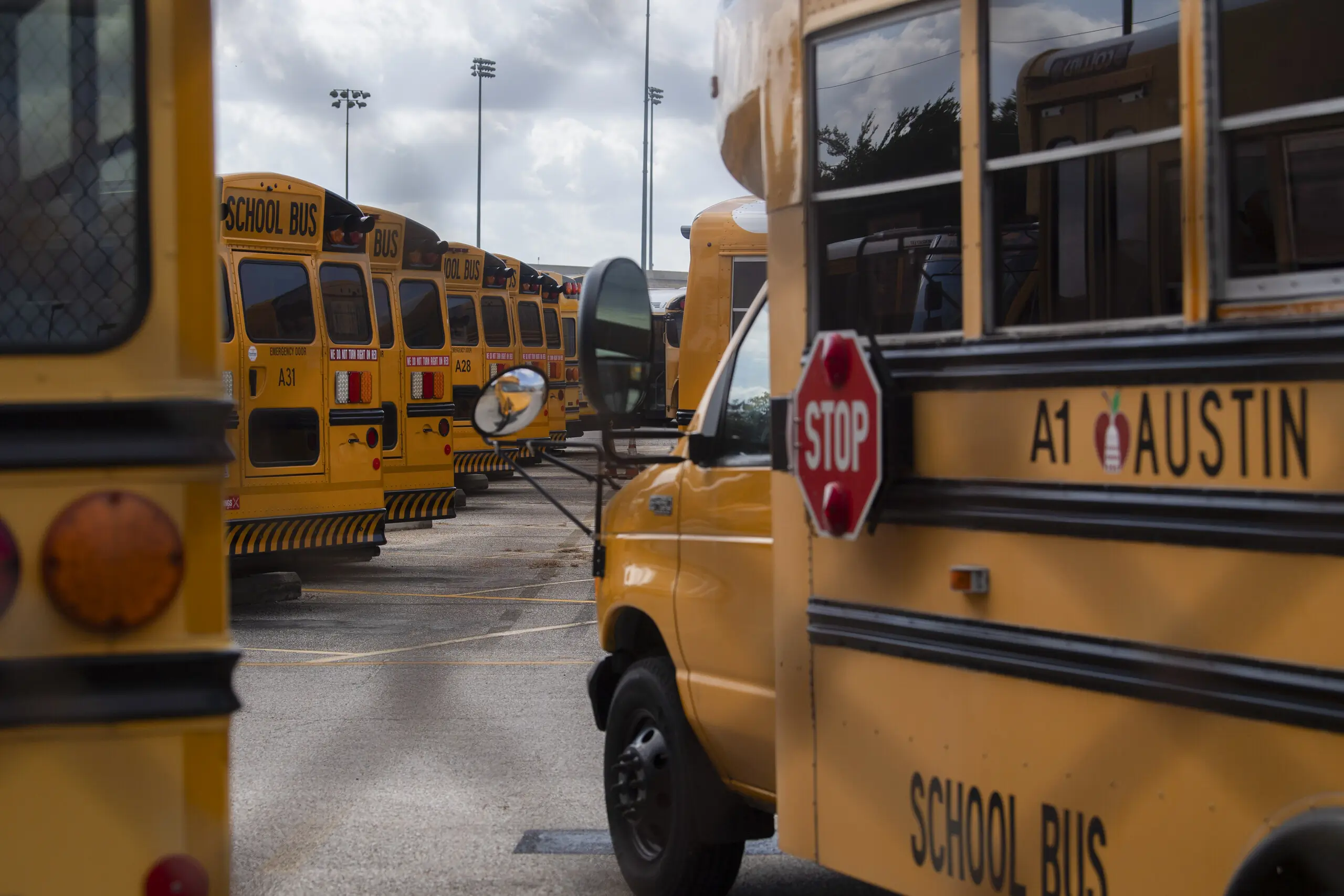
Austin ISD sent more than $770 million back to the state during the 2024-25 school year, by far the most of any district. Austin has led the state in recapture payments for nearly 20 consecutive years, according to the coalition. Slightly less than half of the district’s students come from low-income households, though the number of children learning English and kids with dyslexia rank high above state averages.
West Texas’ Pecos-Barstow-Toyah ISD paid roughly $198 million, the second-largest amount. The Midland school district, which recently sued the state, paid the sixth-most at $92.4 million. Houston ISD, the largest district in Texas, paid the tenth-most at $55.5 million.
What are arguments for and against recapture?
Some property-wealthy districts argue that because Texas counts recapture as part of its funding contribution to public schools, elected state leaders use it not as a tool to improve resources for low-income students but rather as an excuse to avoid funneling additional money to the children most in need.
Frustrations with recapture are underscored by the reality that many Texas districts are sending money back to the state as they close schools, cut programs and navigate staffing shortages.
But without recapture, advocates fear, schools in property-wealthy districts would receive significantly more funding to educate their students than those in areas with low property values, potentially leaving underserved children worse off.
Some public education advocates argue that the problem is not with recapture but with inconsistent and unreliable state funding. Prior to the 2025 legislative session, for example, Texas schools endured six years without a boost to the pot of money schools can use to raise teacher salaries and cover operational expenses.
What is Midland ISD arguing in its lawsuit?
Located in a community rich in oil and gas, Midland will pay the state more than $83 million for recapture this school year, according to a draft of the legal filing. That represents 27% of the district’s $313 million generated locally.
Midland has consistently ranked top 10 in recapture districts over the last decade, according to the Texas School Coalition.
Midland school trustees contend that recent changes to Texas’ education funding system, dating back to 2019, unfairly deprived local communities of decision-making power over how they tax residents, instead granting much of that authority to the education commissioner.
Rather than allowing local school boards to set taxes within a certain range determined by the state, districts do so at the rate decided by the commissioner or risk losing state funding, they argue. Meanwhile, state lawmakers continue to impose requirements on how districts spend money raised locally, which the Midland trustees say prevents them from addressing their community’s particular needs.
Roughly 68% of the district’s students are Hispanic, while nearly 55% qualify for free or reduced-price lunch — the latter of which the state and federal governments consider a measure of poverty. The trustees argue that the number of students who come from low-income households shows that property wealth does not necessarily equate to educational wealth.
What is the broader political context?
State leaders have allocated tens of billions of dollars toward reducing the annual tax bill homeowners and businesses pay each year. They have also imposed tighter limits on how much local governments can increase taxes to pay for services such as public safety and parks.
The legal challenge to recapture from Midland, a community that reliably votes Republican, comes as top GOP leaders such as Gov. Greg Abbott now push to abolish school property taxes. Several Texas House lawmakers and prominent conservative groups have embraced the approach, though finance experts warn doing so would prove costly and appears unrealistic.
Property taxes make up the majority of public school funding, while state dollars generally fill remaining gaps along with some federal aid.
Attorneys Kevin O’Hanlon and Kara Belew, meanwhile, will represent Midland ISD in the recapture lawsuit.
O’Hanlon represented the Texas Attorney General’s Office in Edgewood v. Kirby — the landmark school finance case that led to the creation of recapture. Belew has served as statewide budget director for Abbott, as one of the Texas Education Agency’s top finance experts and as a senior policy adviser for the conservative Texas Public Policy Foundation.
Disclosure: Texas Public Policy Foundation has been a financial supporter of The Texas Tribune, a nonprofit, nonpartisan news organization that is funded in part by donations from members, foundations and corporate sponsors. Financial supporters play no role in The Texas Tribune’s journalism. Find a complete list of them here.