
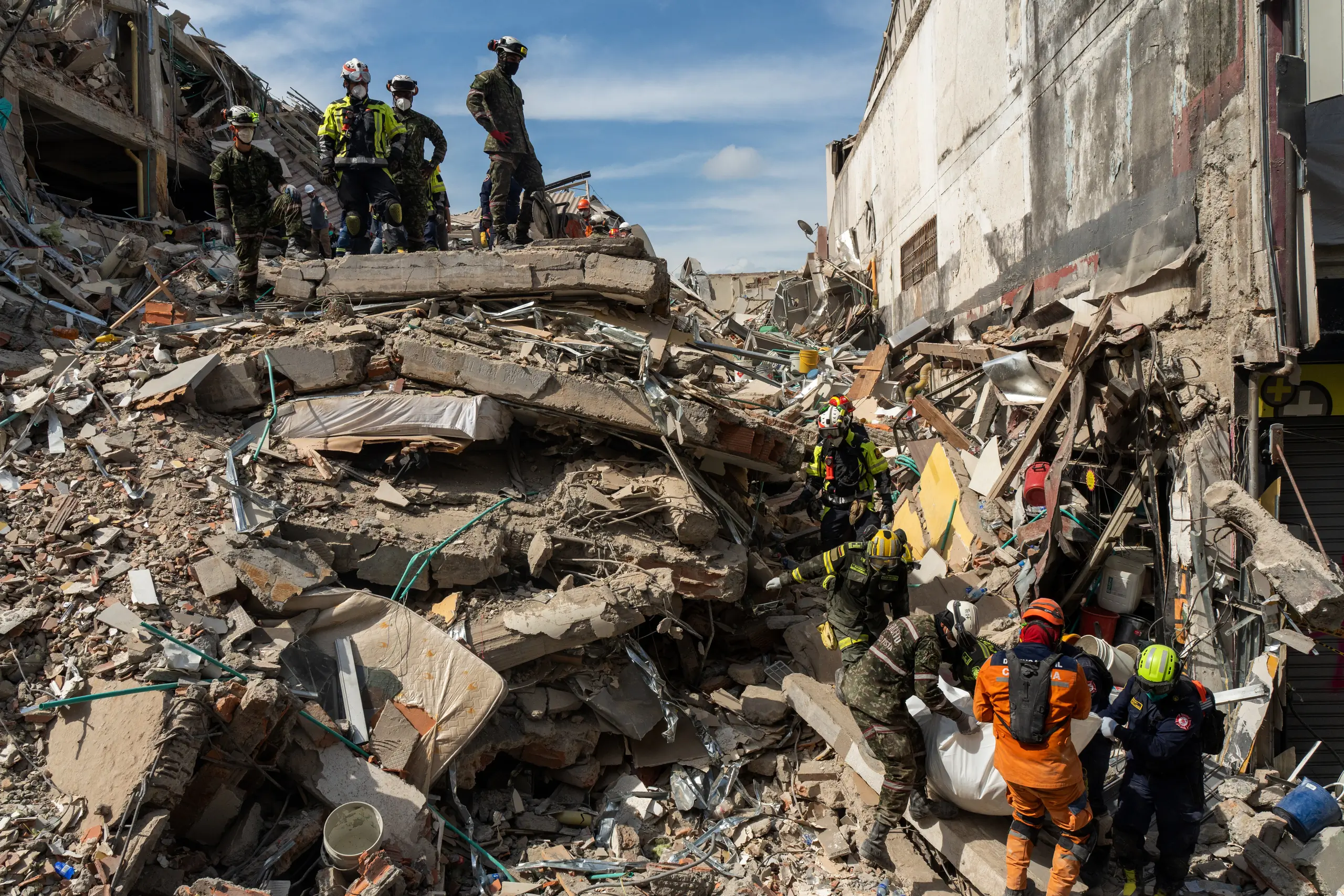
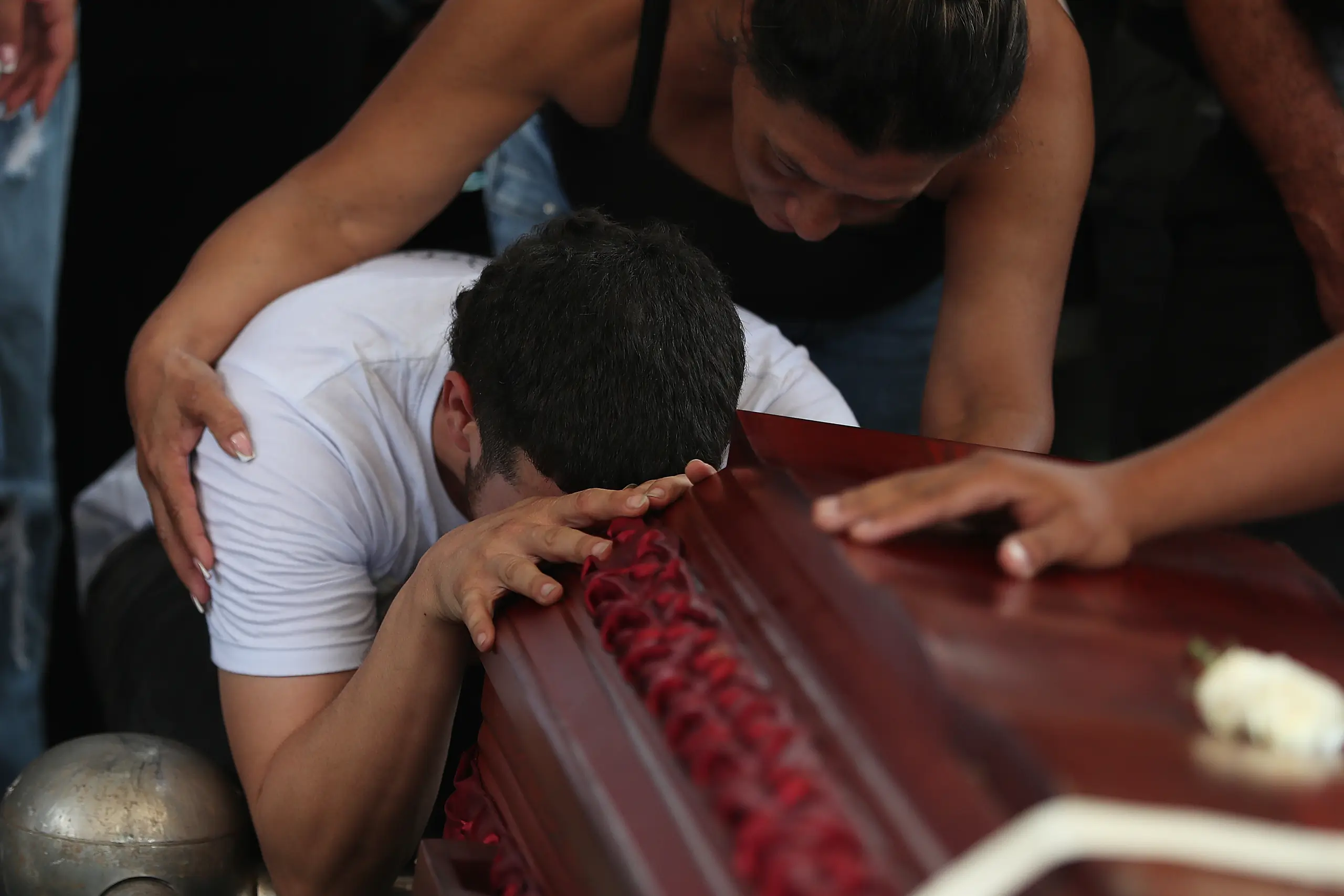
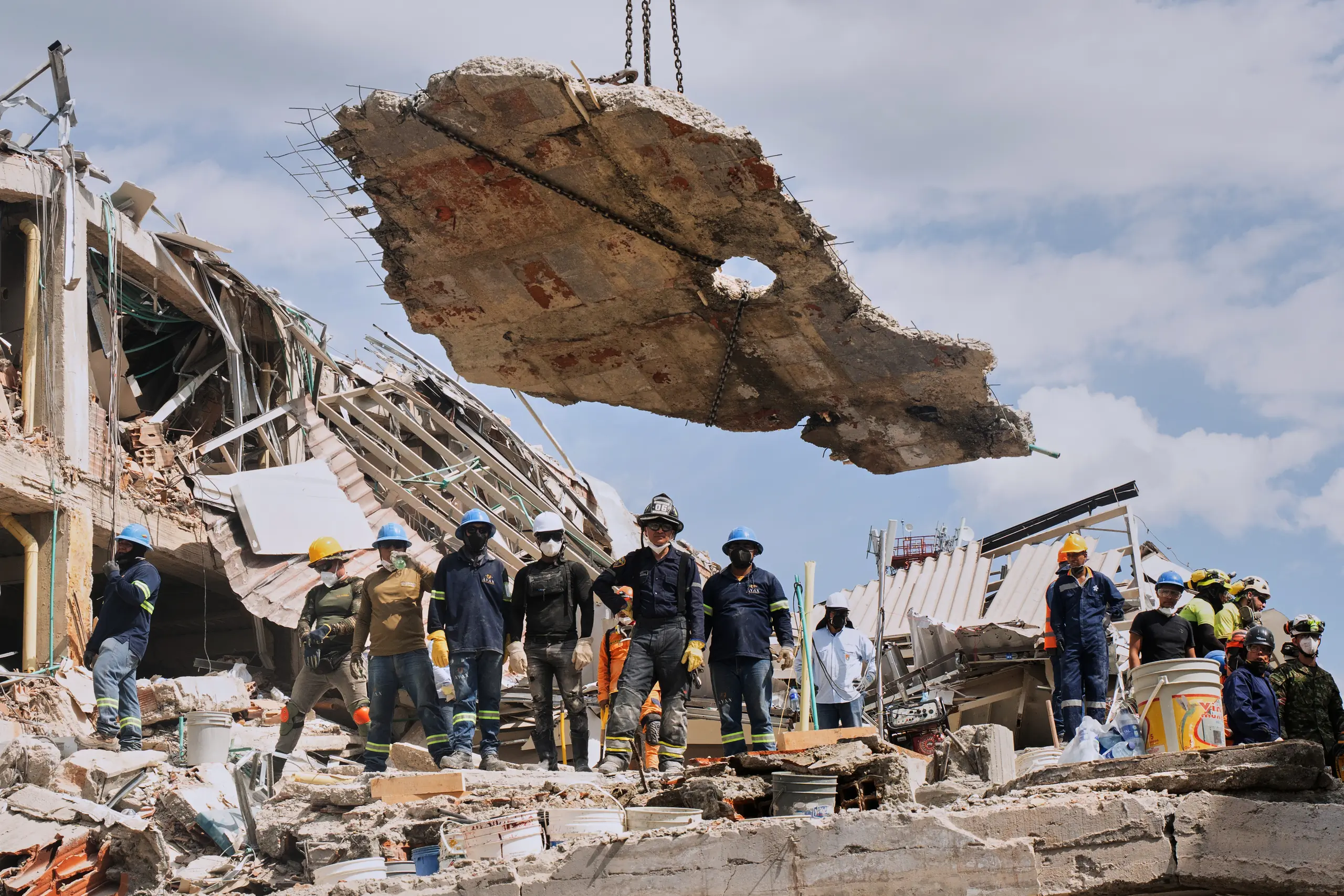
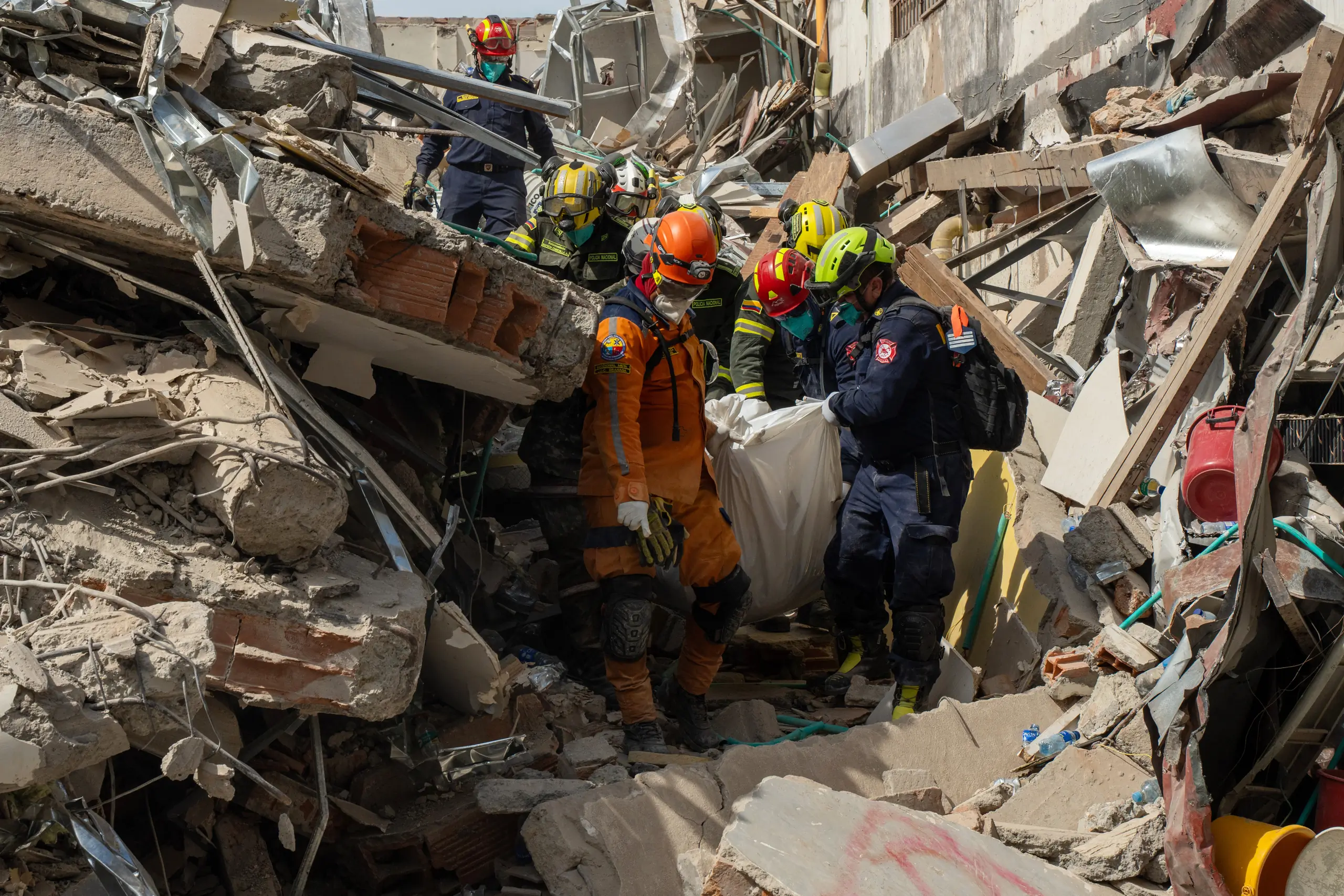
CALI – Rescuers reported apparent signs of life under the rubble in two of the Colombian cities hit hardest by a massive earthquake, rekindling hopes Friday that more people could be found alive.
Search and rescue teams from Venezuela, Argentina and Israel joined the search for survivors following the 7.4 magnitude quake that struck the South American nation on Monday, killing at least 287 people. At 96 hours since the temblor hit, the window for survival was narrowing Friday afternoon.
Recommended Videos
The mayor of Pereira, Mauricio Salazar, told radio station FM on Friday that “contact was made with a woman who was asking for help amid the rubble” of a collapsed hotel at around 4 a.m. He suggested other people may have survived but were still trapped.
Authorities in Cali also reported apparent signs of life, saying at least three people were trapped under collapsed buildings. The search and rescue effort has been extended through Saturday.
Residents who lost their homes must start over again
With the overall search for survivors winding down, Colombia faced another challenge: rebuilding a nation shattered by a disaster that affected more than 100,000 people.
Tens of thousands of houses were damaged or destroyed, according to the government. Authorities have also reported damage to thousands of schools, medical facilities and community centers in more than 400 cities.
“There is no place to live, we lost everything,” Ebert Jonathan Morales, 38, said Friday in a shelter in Cali.
Morales is one of the 102,263 people whose lives were upended by the quake. The government says nearly 4,000 people were injured and hundreds remain missing. Private groups estimate the number of missing is in the thousands.
Morales said he, his wife and four children are trying to rebuild from scratch.
“The earthquake destroyed several neighborhoods in the city. Many houses were damaged, and buildings collapsed,” he said. “We are going to stay here until the government gives us some help, some support.”
The government focuses on providing shelter
The devastation has tested Colombia’s President Abelardo de la Espriella, who was inaugurated just days before the earthquake shook the country's west. De la Espriella acknowledged Thursday night that “the situation is complex” and announced a plan to partner with private companies to rebuild, as well as subsidies for families who are homeless.
“We will not overcome this tragedy alone as a government,” he said. “We need the private sector to rebuild Colombia together.”
Monday’s earthquake was the most powerful to hit Colombia this century. Government aid has yet to arrive in some areas, where many people are relying on volunteers and neighbors for help.
“A neighbor is giving me shelter,” Olga Castro, a mother of five in Cali, said. “At least we survived, but right now we are practically on the street because we don’t have a home anymore.”
De la Espriella said national and international funds raised in response to the disaster will focus on the reconstruction of hospitals, schools, homes, roads and airports.
Rebuilding the country requires a “serious technical assessment” to determine which buildings can be used, which can be repaired and which must be demolished and rebuilt, said Yezid Alvarado Vargas, a professor in construction engineering at Javeriana University, in Bogota, Colombia.
“Before even discussing reconstruction, we must guarantee temporary housing, food, healthcare, continuity of basic services and economic support for families who lost their homes or livelihoods,” Alvarado said.
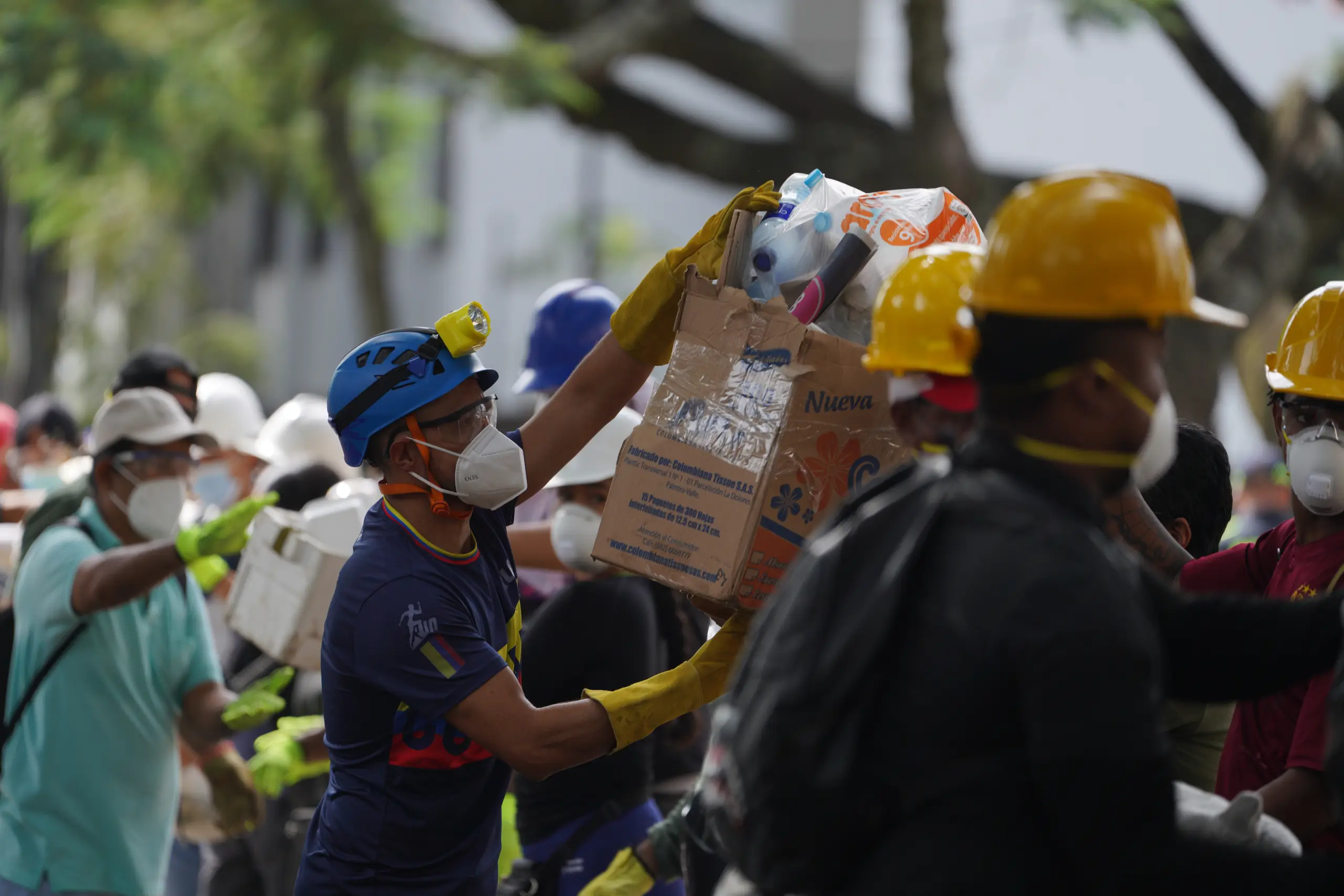
In Bogota, Colombia’s capital, around 500 volunteers gathered at a reception center to sort food, toiletries and pet food before distributing the supplies in the most affected areas. From youngsters to the elderly, everyone diligently participated in the challenging relief efforts.
“We all have to help. Today is for you, tomorrow might be for me,” volunteer Jorge Muñoz, 85, said. One of the oldest helpers at Bogota's Vive Claro aid collection, Muñoz has witnessed the devastation caused by other earthquakes, including one in 1999 that killed more than 1,180 people.
National and international aid keeps coming
Authorities have converted schools, parks and public buildings into shelters, providing tents, mattresses and food to the displaced. In other hard-hit cities, residents improvised shelters in the streets, while hundreds of volunteers rush to help those in need in hard-to-reach areas.
“These are isolated, neglected territories, historically lacking in institutional support, already plagued by violence, and now they are hit by an earthquake of this magnitude,” said María Mercedes Liévano, director of Save the Children in Colombia.
“It’s a crisis on top of a crisis, leaving the population in a situation of extreme vulnerability,” she added, citing communities including Buenaventura, the country’s main port, and Choco, the earthquake’s epicenter.
Many buildings in Pereira have limited or no access to electricity and water, and volunteers have been delivering hygiene kits to displaced families in the city's shelters, said Pamela Londoño, a technical adviser with Project HOPE. Of the five or six shelters in the city, at least one is already full and no longer accepting new residents. The nonprofit is also assessing medical supply needs.
Other areas are also suffering, such as the town of Roldanillo, where approximately 60% of residents do not have access to clean water.
“The main concern is the lack of basic services for multiple communities,” Londoño said. “This is a really critical situation.”
De la Espriella visited several cities to track relief efforts and aid distribution, including Quibdo, in the Choco region, and Pereira. Authorities are still waiting for tons of supplies and humanitarian aid from countries that have pledged their support, including Peru, China, the United States and the United Arab Emirates.
“My heart, my strength and my spirit are with all the victims and with all these territories that have been forgotten and now devastated by nature,” he said. “We must rebuild them. There is a great task ahead and I am committed to it.”
The Trump administration announced Friday an additional $11 million in humanitarian aid — including food, health, protection and shelter assistance — bringing the total U.S. assistance following the earthquake to $26.5 million.
The U.S. “continues to coordinate with Colombian President Abelardo de la Espriella and the Colombian government to assess and respond to earthquake-related needs,” the State Department said in a statement.
___
Suarez reported from Bogota, Colombia and Batschke reported from Santiago, Chile.