
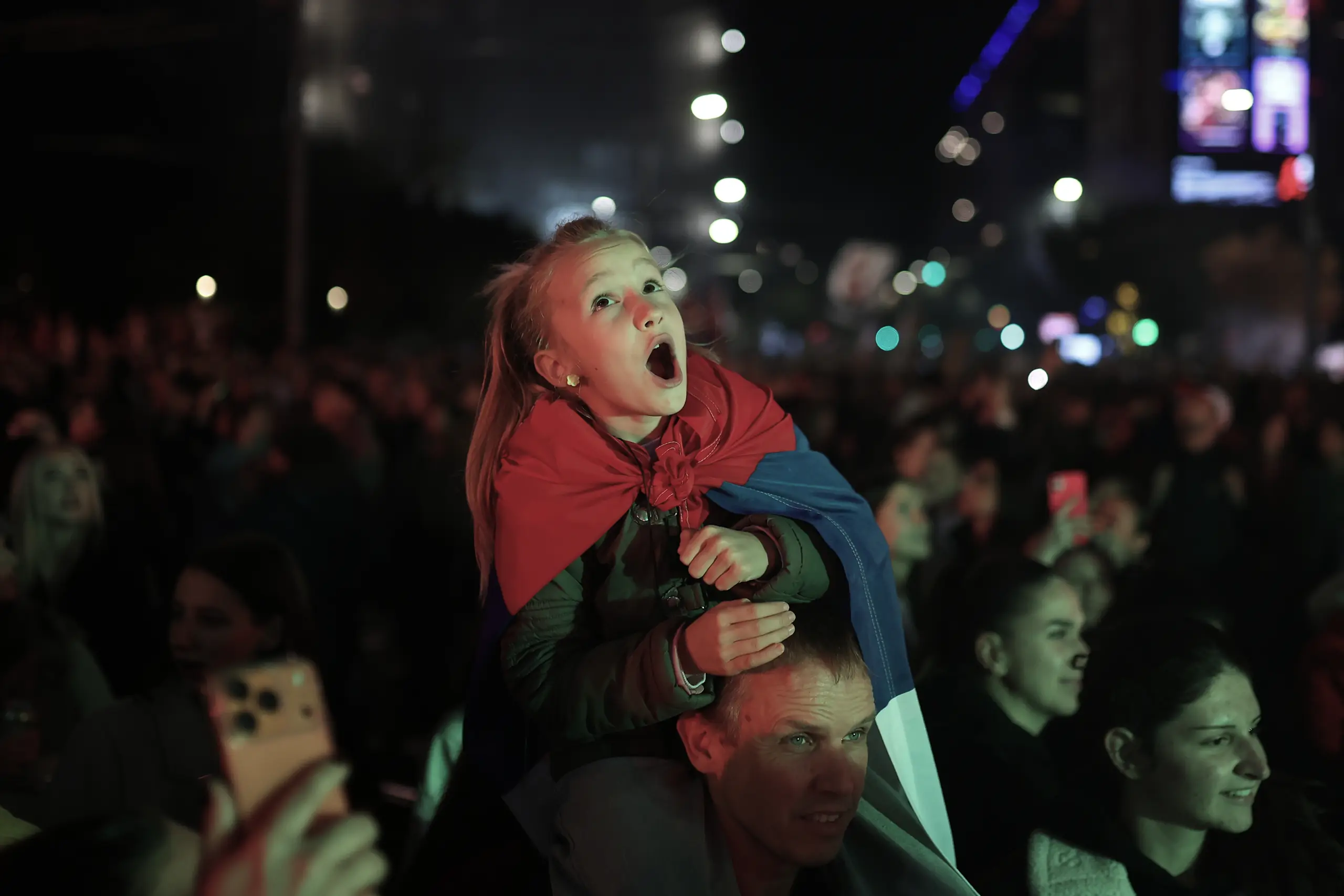
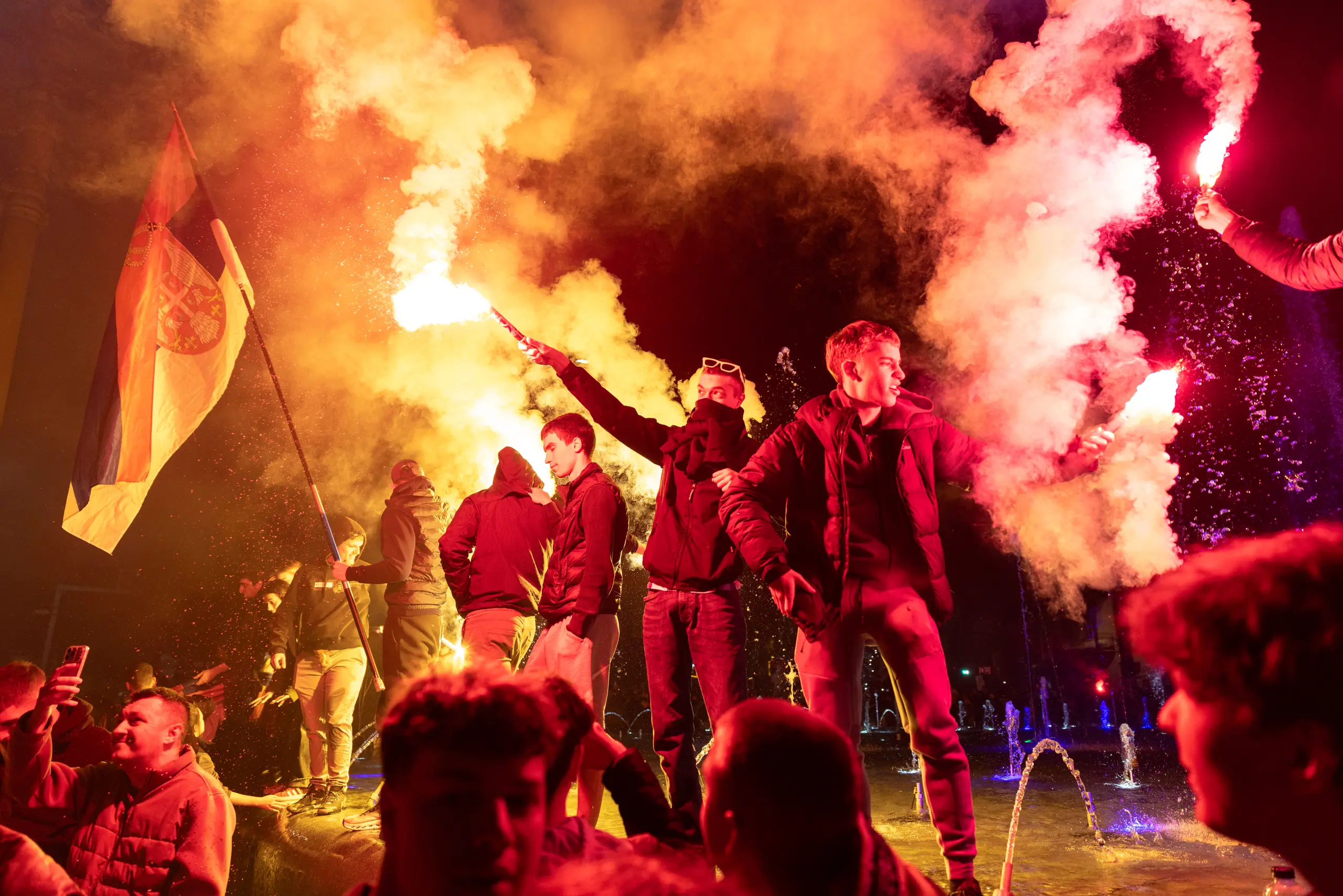
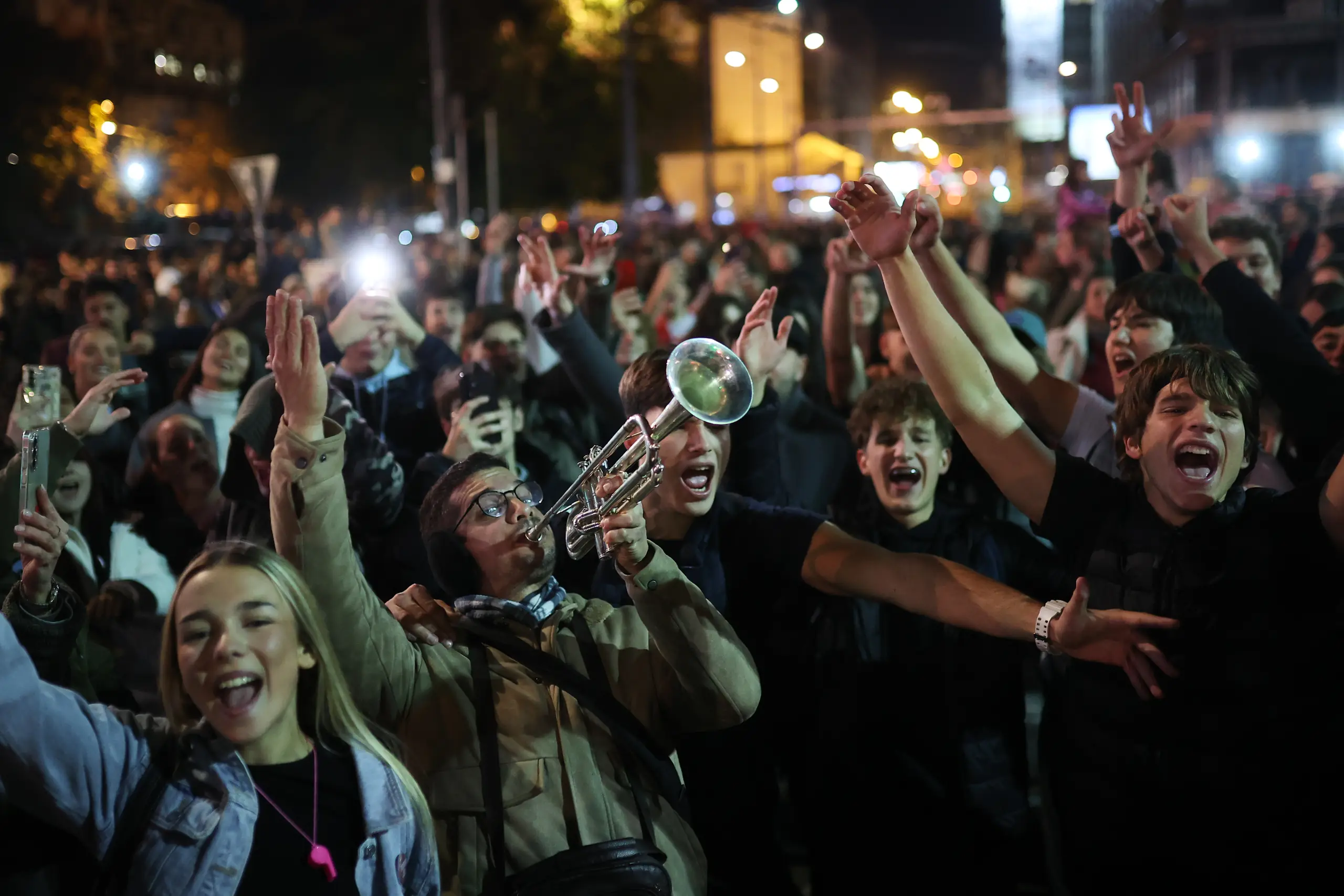
BELGRADE – Serbia's youth movement scored a stunning election victory against the country's longtime strongman Aleksandar Vucic. But turning its promises of sweeping democratic reforms into reality could prove far more difficult.
The diverse, leaderless movement, whose candidates have little political experience, has promised to root out corruption, free the media and restore the rule of law after Vucic's 14 years in power.
Recommended Videos
Though armed with a strong mandate for change stemming from a convincing election victory, a new government will still encounter a myriad of hurdles along the way. Expectations are running high and so is impatience after public discontent built up over the years.
Here is a look at the challenges that lie ahead:
A government could be sworn in by the end of the year
Though Vucic conceded defeat just an hour and a half after polls closed Sunday, it's likely to take weeks before a new government is formed.
Serbia's election laws provide for a period of appeals and potential reruns at individual polling stations before final election results are certified and a new Parliament is inaugurated. Any meaningful policy changes can only take place after a new government takes office.
Serbia’s state election commission so far has released only preliminary and incomplete results of the vote, but they are unlikely to change much. The Students’ List is set to have a comfortable majority of 140 seats in the 250-member Parliament while Vucic’s SNS party will have 104.
The process could be further complicated by a presidential election that Serbia must also hold following Vucic's resignation as president last month. Vucic stepped down to lead the SNS ticket in the parliamentary race, hoping to return to power as prime minister. That triggered the need for a separate vote to choose his successor as head of state.
Attacks on symbols of Vucic's rule reflect impatience
As joyful crowds took to the streets to celebrate the students' victory Sunday, some in the crowd stoned the withdrawing police and dismantled a camp used by Vucic loyalists in a park in central Belgrade for more than a year.
On Monday evening, groups also stormed the notorious pro-Vucic private Informer television that has led a campaign labeling student protesters as enemies of the state and traitors. The same TV carried a live broadcast of the mass funeral in September in Belgrade for Ratko Mladic, the former Bosnian Serb commander convicted of genocide by a U.N. court.
Police cordons guarded another pro-Vucic broadcaster, Pink TV, and Vucic was swift to condemn the “violence,” warning his supporters could “self-organize.”
The incidents are seen as minor in view of the deep polarization and confrontation among opposed camps in Serbia. But they illustrate the volatility of the situation and potential for escalation in case of a prolonged power vacuum.
Media reform and oversight are among priorities
Media expert Snezana Milivojevic told N1 television that the media situation is particularly sensitive because it is “before everyone's eyes.” While changes are taking place spontaneously in some state-run media, private television channels like Informer have continued with pro-Vucic propaganda since the vote.
Among those who broke into the TV station and confronted the editor-in-chief Dragan Vucicevic was Dijana Hrka, the mother of one of the 16 victims of the 2024 train station tragedy in Serbia’s north that set off the protests.
On Tuesday, Serbian journalists' associations filed a formal request to the state media regulator that the station's broadcasting license be revoked.
Both the students and the European Union mission in Serbia urged calm and appealed to citizens to be patient. The students said they are against any such attacks, promising to "liberate the media in the assembly, through an institutional struggle for freedom and professional journalism.”
Milivojevic noted that the public's "big expectations will be hard to satisfy.”
Fight against entrenched corruption
Born out of a struggle against corruption that was triggered by the Novi Sad train station canopy collapse, the student movement has made the fight against graft a central focus of its 11-point program.
To achieve this, the new government will have to dig deep and hard — corruption is believed to be interwoven and rooted in all spheres of Serbia's society after decades marked by partisan employment and cronyism, layers of bureaucracy and lack of oversight.
Students have promised to overhaul the police force and the judiciary to make sure officers and prosecutors with impeccable careers can fight corruption.
Other promises are the creation of a police unit that would be accountable to independent prosecutors, a ban on corrupt officials and a review of all major projects of the previous government. All these, however, will take time.
Relations with the EU and Russia are yet to be addressed
The students have deliberately stayed away during protests from any topics that can prove to be divisive, and those include Serbia's plans for EU membership and traditionally friendly relations with Russia.
Vucic was known for his policies of balancing between the two, which was partly the reason why Serbia's EU bid stalled when Vucic refused to join the EU sanctions against Moscow over the war in Ukraine.
The issue will await Serbia's new government, and some of the Students' List officials have already said the sanctions policy won't change. The pledge could disappoint many supporters who wish to see Serbia move away from Russia and closer to the EU.
Forging closer relations with the West has been hard for Serbia since NATO's 1999 bombing campaign and the recognition by the United States and most EU countries of Kosovo’s 2008 declaration of independence from Serbia.
While Russia is widely seen as a friendly nation compared with the EU, and primarily because of Kosovo, the bloc's enlargement commissioner Marta Kos noted that planned reforms “can bring Serbia closer to the EU.”
After speaking on the phone to Ilija Srdanovic, a physician who is the first on the Students’ List ticket, Kos wrote on X that “we are ready to support the new Serbian government in progressing on its European path.”