

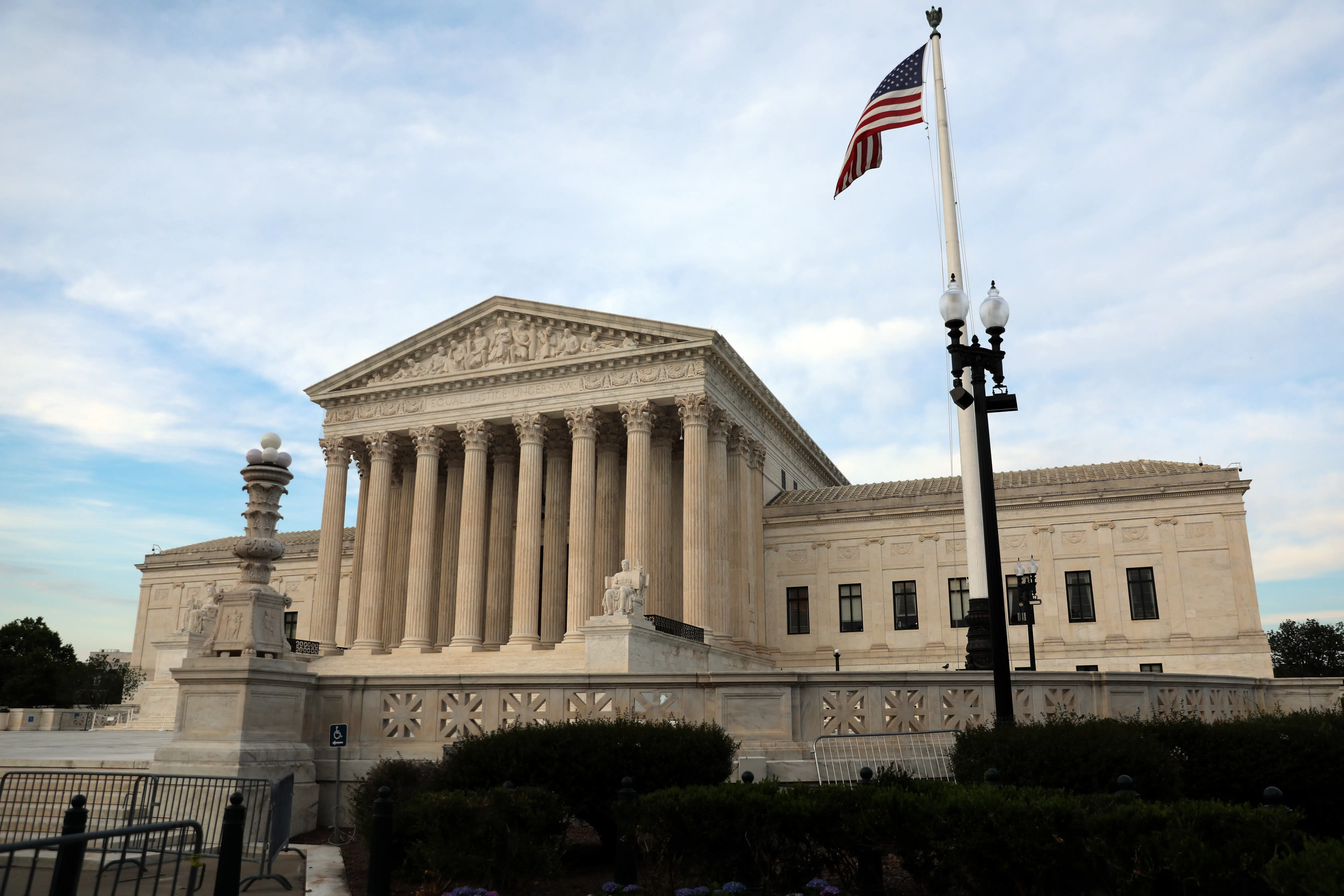
WASHINGTON – The Supreme Court refused Monday to revive a $300 million defamation lawsuit filed against CNN over its coverage of a prominent attorney's remarks made while defending President Donald Trump during his 2020 impeachment.
The majority declined to take up the case in a brief, unexplained order. Justices Neil Gorsuch and Clarence Thomas dissented, calling on the court to reconsider the legal standards for public figures who claim defamation.
Recommended Videos
Alan Dershowitz said the news network aired only a portion of the comment made during his defense of the president, distorting his meaning to make him look like he’d “lost his mind,” according to court documents.
The network said that multiple outlets had interpreted his remarks in a similar way, and Dershowitz couldn’t show CNN was trying to mischaracterize what he said.
In his appeal, Dershowitz had urged the court to reconsider New York Times Co. v. Sullivan. The landmark First Amendment case that made it harder for public figures to win libel lawsuits because it requires proof that an outlet knowingly published something false, or showed a reckless disregard for the truth.
Dershowitz, a retired Harvard Law School professor and legal commentator, was part of Trump's defense team during his impeachment trial over allegations that Trump wanted political favors from Ukraine in return for U.S. military aid. Trump was acquitted by the Senate.
Dershowitz responded to a question at one point by saying, “the only thing that would make a quid pro quo unlawful is if the quo were somehow illegal." Providing arms to Ukraine, he said, isn't illegal.
He alleged that CNN only played what he said moments later: “Every public official that I know believes that his election is in the public interest and, mostly, they are right, your election is in the public interest, and if the president does something which he believes will help him get elected in the public interest, that cannot be the kind of quid pro quo that results in impeachment.”
Dershowitz said the edit made it seem like he was arguing a president could avoid impeachment for illegal acts as long as he was doing it to get reelected – a concept his original suit called “preposterous and foolish on its face.”
CNN countered by saying it did air his full remarks during its live coverage, and invited him on twice more to expand on his meaning.
Lower courts tossed out the suit, finding that Dershowitz hadn’t shown CNN acted with “actual malice” in its reporting, making it fall short of the standard set by New York Times Co. v. Sullivan.