
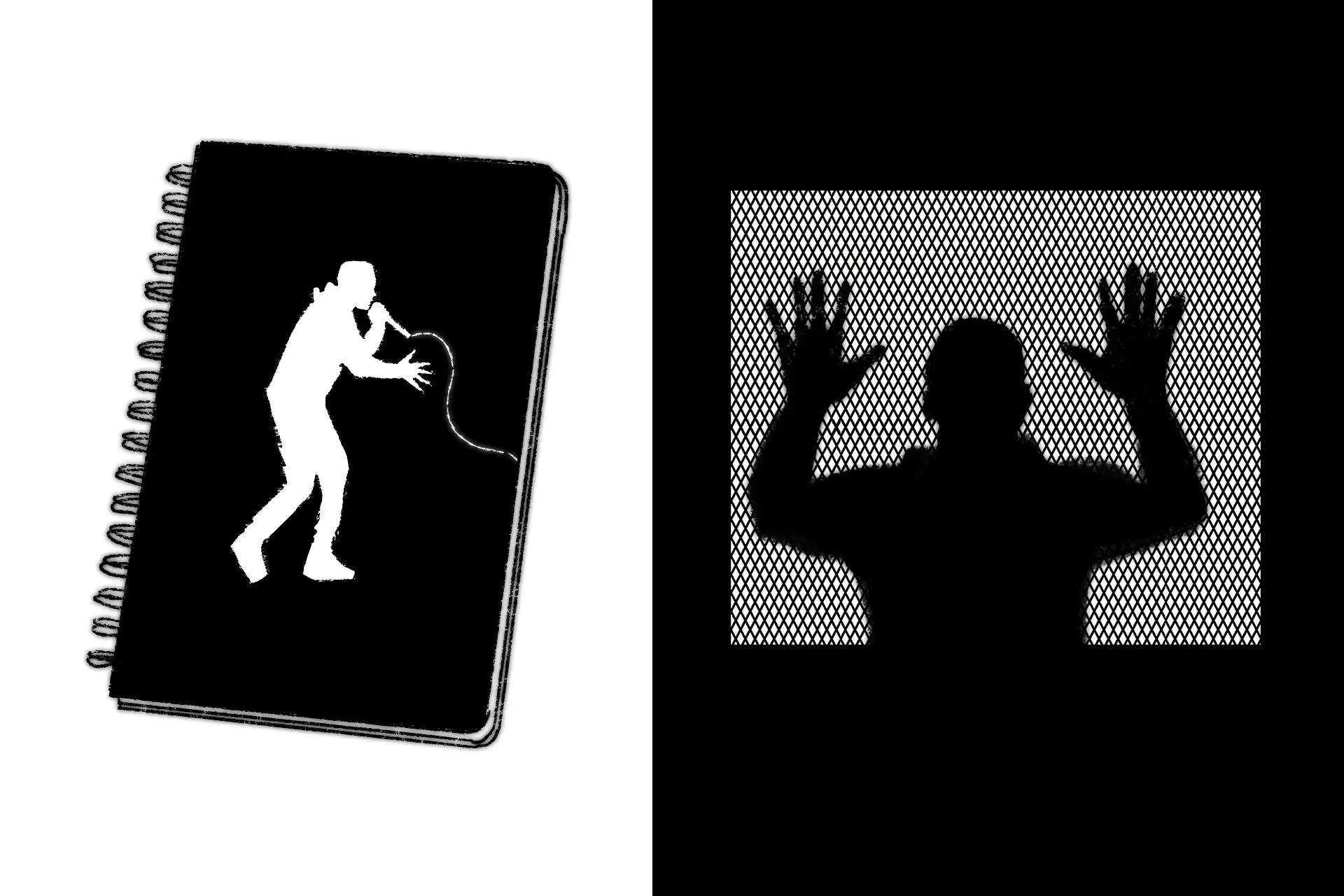
When he was 19, James Broadnax jotted down rap lyrics, thoughts and even job leads in a notebook that would become evidence at his capital murder trial.
Prosecutors selected lyrics with alleged references to gang affiliation and shootings to convince jurors that instead of life in prison, Broadnax, who is Black, should be put to death after his conviction — a move his lawyers argue biased the almost all-white jury.
Recommended Videos
Broadnax isn’t the only defendant or even the only person on Texas’ death row whose rap lyrics have been introduced to a jury. Rap lyrics have featured in hundreds of court cases in more than 40 states over the past 50 years, though judges often exclude other forms of creative expression from being used as evidence, researchers have found. Treating rap lyrics as diary entries minimizes their artistic value while playing on negative racial stereotypes to influence jurors, experts say.
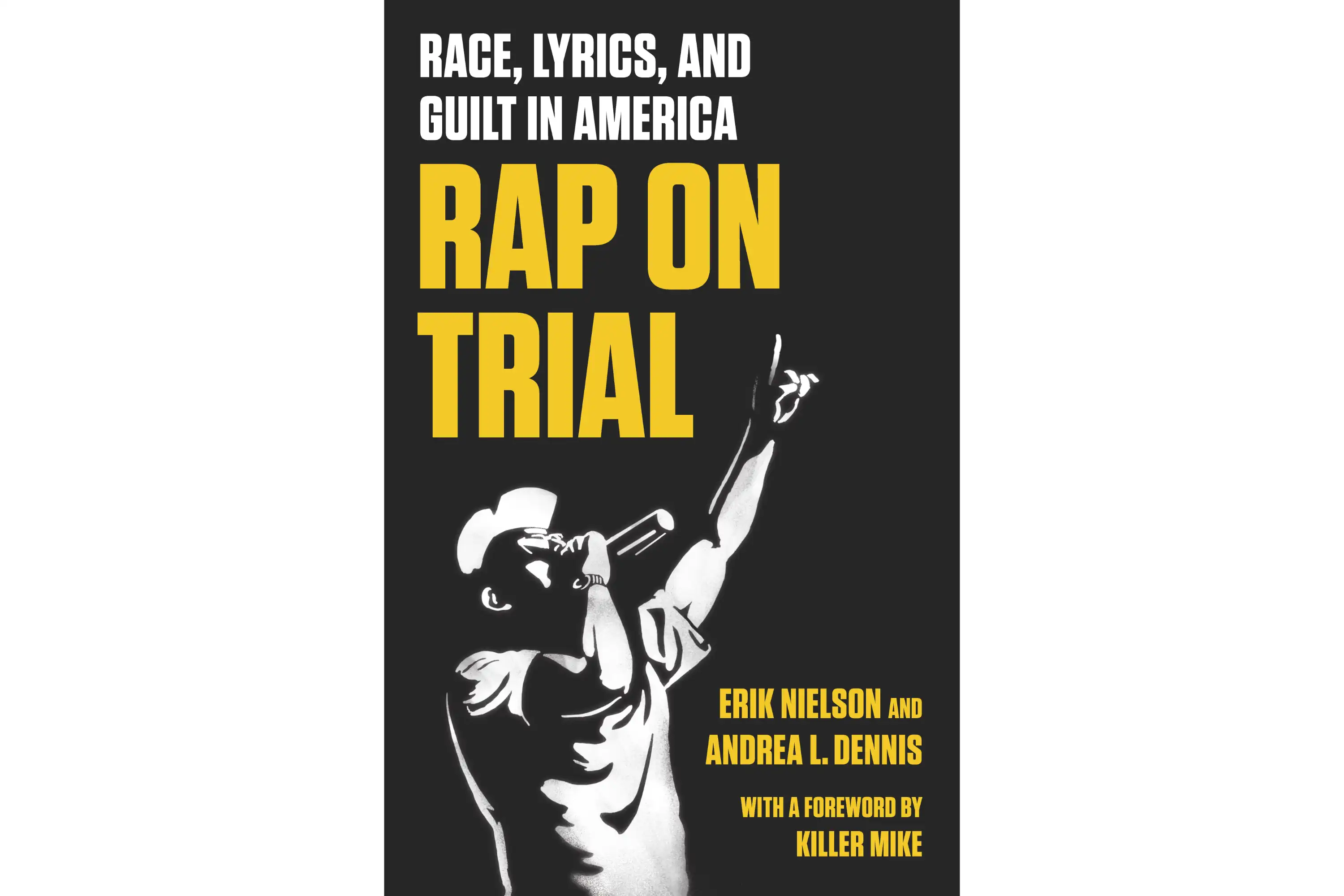
“It denies rap music the status of art. It is characterized as autobiography,” said Erik Nielson, co-author of the book “Rap on Trial.” “It really does speak to underlying assumptions that some people have about young men of color — and that’s almost exclusively who this practice targets — that they aren’t sophisticated enough to engage in various literary devices. That there isn’t metaphor here.”
Rap lyrics are commonly used in racketeering or gang-related cases. Prosecutors try to establish the defendant’s involvement in an underlying crime by introducing lyrics as evidence, Nielson said. If someone is charged with a shooting, for example, prosecutors look for lyrics that mention a shooting.
“If the lyrics were written before the alleged crime, the prosecutors will say this is evidence of motive,” Nielson said. “If they’re written afterward, they’re characterized as a straight-up confession.”
Rap lyrics introduced in court as autobiographical
Broadnax and his cousin were charged with murder for the 2008 shooting deaths of two men outside a suburban Dallas music studio. After more than a decade on death row, he is scheduled to be executed April 30.
In their pending appeal asking the U.S. Supreme Court to halt Broadnax’s execution, his attorneys argue that a judge should have considered the potential for racial bias and instructed the jury that his lyrics should not be viewed as autobiographical.
“The emphasis on the rap lyrics was a key element in this racially charged narrative,” Broadnax’s attorneys wrote. “Worse, the record in this case confirms that the jury delivered a death sentence based on the racial stereotypes invoked by the rap lyrics.”
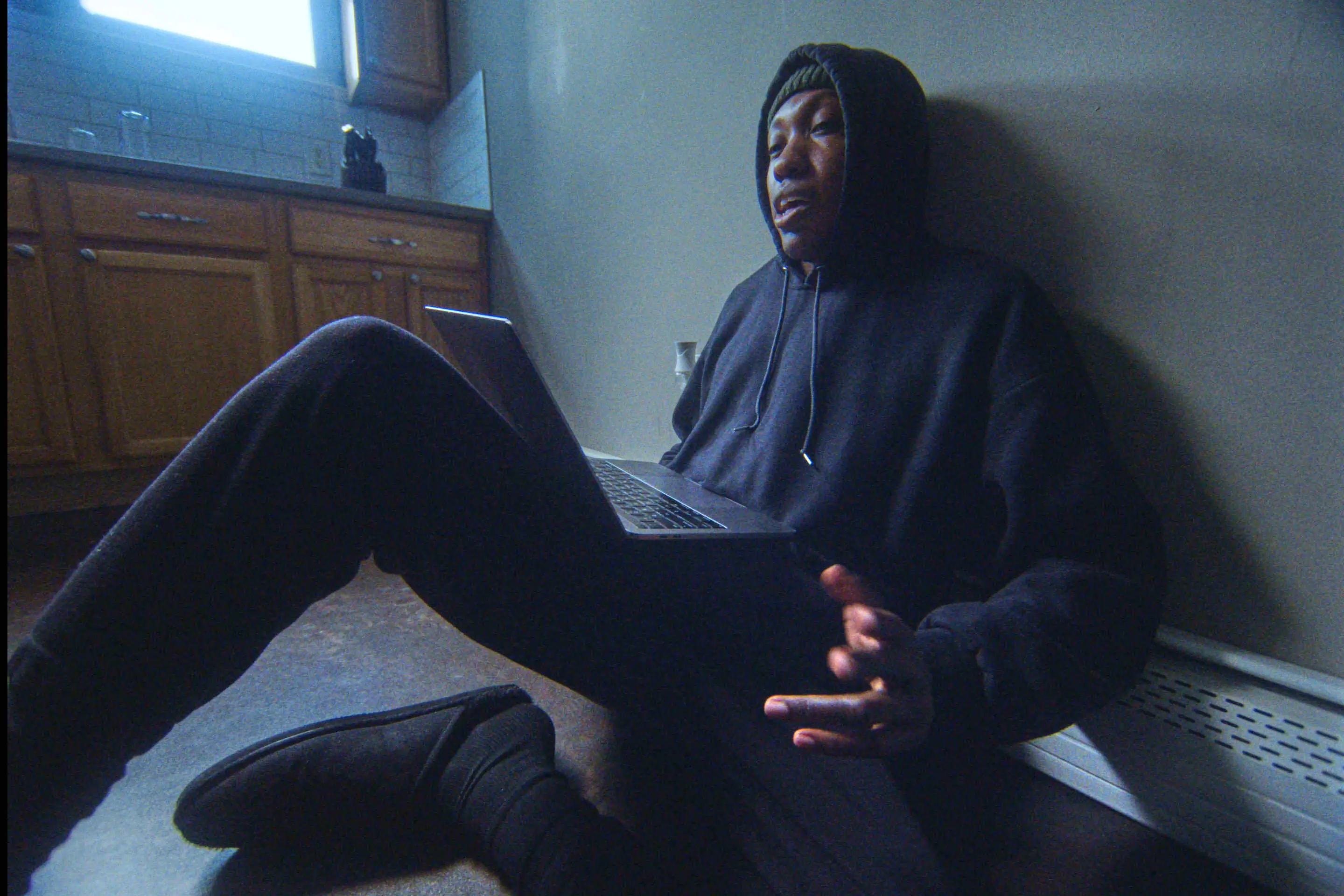
Kemba, a rapper featured in the documentary “As We Speak: Rap Music on Trial,” told The Associated Press that introducing rap lyrics is particularly effective with juries because of innate prejudices — and because prosecutors want convictions.
“There’s a lot of people that don’t see rap or Black music as artistic expression,” he said. “And when you’re in a court case, there’s already an assumption that you’ve done something (wrong).”
The defendants in these cases are “almost exclusively young men of color, often with very limited resources,” and many can’t afford a private attorney, Nielson said.
But some high-profile rappers have had their songs introduced in court, like Young Thug, whose lyrics were used as evidence at his trial on gang and racketeering charges. He pleaded guilty to those charges and was released from custody in 2024.
Stereotypes about rap emerge
“The criminalization and the targeting of hip-hop has been going on for all 50 years of the culture,” said Nielson, who noted the use of rap lyrics in court ramped up in the early 1990s.
The monitoring of Black artistic expression dates back to the antebellum South, he said, though that intensified as rap music became more critical of power structures, like N.W.A.’s 1989 song “F--- the Police,” which condemns police brutality.
In 2022, The New York Times’ Jaeah Lee looked for non-rap examples of lyrics used at trial from 1950 onward and found only four. Three cases were thrown out and one led to a conviction that was overturned. In that same time period, Nielson found roughly 700 examples of rap lyrics used in court cases, including lyrics that someone rapped but didn’t even write.
Another study conducted by University of Nevada assistant professor Adam Dunbar examined stereotypes of rap. He presented people with lyrics, saying they were from rap, country or metal music. When it came to rap, respondents overwhelmingly considered the lyrics to be autobiographical.
“But if they’re given the same lyrics and told that those are country or heavy metal lyrics, they say, 'No, it’s just art,’” said J.M. Harper, director of “As We Speak.”
Some rappers have begun directly attesting to the fictional nature of their music. The year before he was fatally stabbed in 2021, Drakeo the Ruler released the song “Fictional” from behind bars because his lyrics were being treated as nonfiction. In 2023, 21 Savage described his raps as “fiction as hell.”
“There’s no doubt in my mind that they are doing this for fear of prosecution,” Nielson said.
Rules of evidence can be open to judge's interpretation
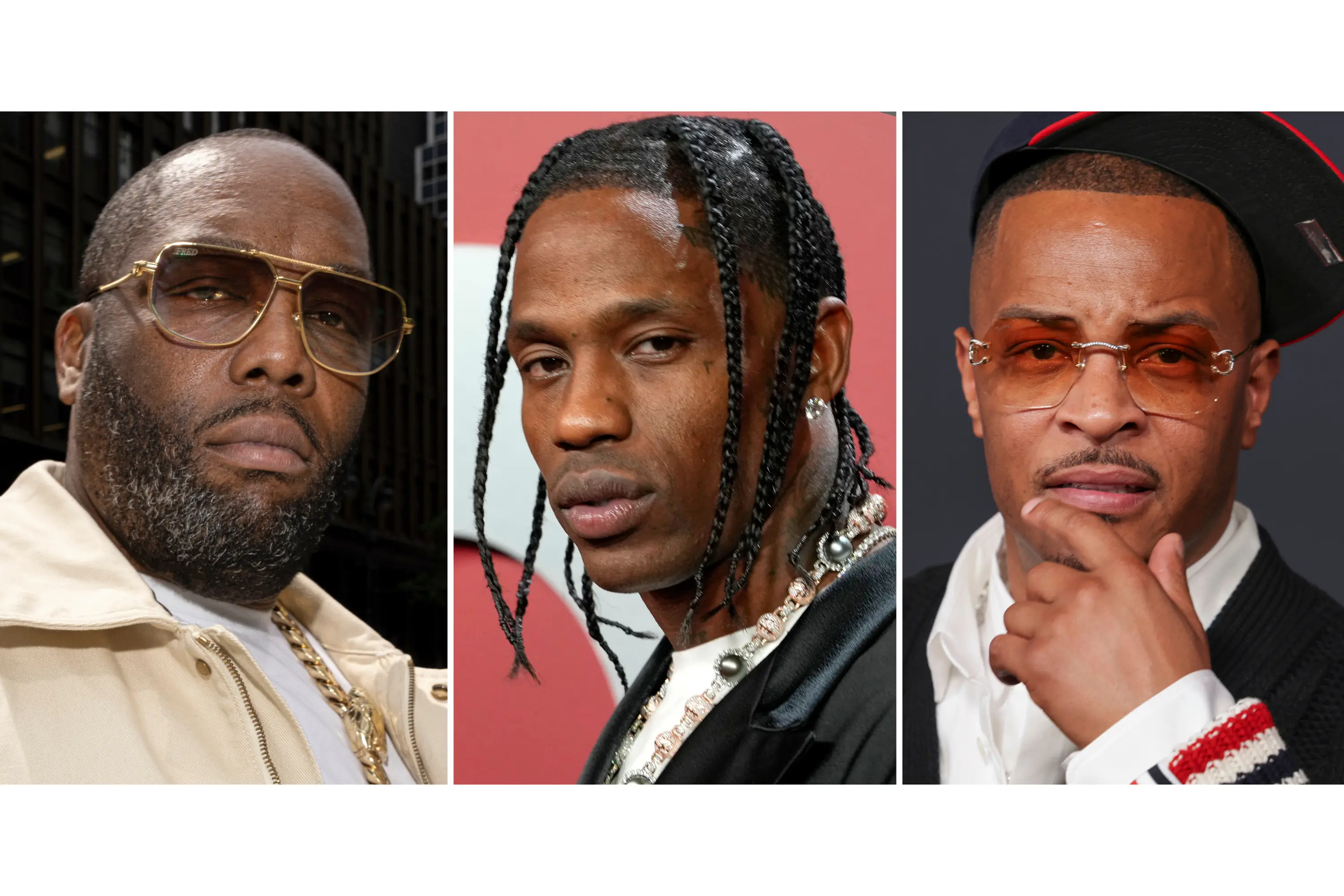
A number of A-list rappers, including Travis Scott, T.I. and Killer Mike, have filed briefs at the Supreme Court in support of Broadnax, cautioning against considering rap lyrics autobiographical.
Prosecutors in the case said Texas law allows evidence relevant to a defendant’s reputation at sentencing and contend the court shouldn’t consider the argument against the lyrics because Broadnax failed to raise concerns in previous appeals. State courts have ruled against other appeals by Broadnax’s attorneys.
“At the end of the day, the most important thing is not the prosecutors,” rapper LL Cool J told the AP in 2024, adding that judges should better block rap lyrics from trials. “The question is: Why is it even admissible?”
Lucius T. Outlaw III, a professor at Howard University School of Law who filed the amicus brief on behalf of Nielson and Killer Mike, said judges enforce rules of evidence specific to each state.
One judge might view rap lyrics as relevant; another may disagree. One might worry about triggering “anti-rap, which is anti-Black, bias,” he said, “where another judge will say, ‘I don’t see that prejudice.’”
“Guidelines about what is relevant when it comes to artistic expression and what is overly prejudicial is so needed,” he said.
Jeff Bellin, a professor at Vanderbilt Law School, said current rules tell judges to exclude evidence if it has low value as proof and a danger of creating bias.
“The safeguard should be judges, but they are often not aware of the social issues, or the context, when it comes to rap lyrics,” he said.
New legislation seeks protection for lyrics
Bellin said legislating around the issue is difficult because lawmakers don’t want to create rules that would exclude evidence truly relevant to any case.
In the past five years, at least 27 bills have been introduced federally and in a half-dozen states to limit the use of a defendant’s creative expressions, including rap lyrics, in criminal proceedings, according to an AP analysis using the bill-tracking software Plural.
On April 9, Maryland became the third state to pass legislation, creating “guardrails and a test for judges to impose anytime prosecutors want to use artistic expression, not just rap,” Outlaw said, noting it requires a factual connection between the potential evidence and the charges.
“It’s not the cure-all, but it’s a huge, important step,” he said.