
NEW BRAUNFELS, Texas – After the City of New Braunfels went from declaring a mayoral victory to announcing a runoff, council members voted to terminate the city attorney.
Members voted 4-3 in favor of ending Valeria Acevedo’s tenure with the city at a council meeting Monday night.
Acevedo was believed to be at the center of how the city interpreted its recent mayoral election results.
In the race, the city announced challenger Michael French (49.18% of the vote) as the winner on May 2 over incumbent Mayor Neal Linnartz (38.25%) and two other candidates because — as the city charter dictates — French was the candidate who earned the most votes (plurality).
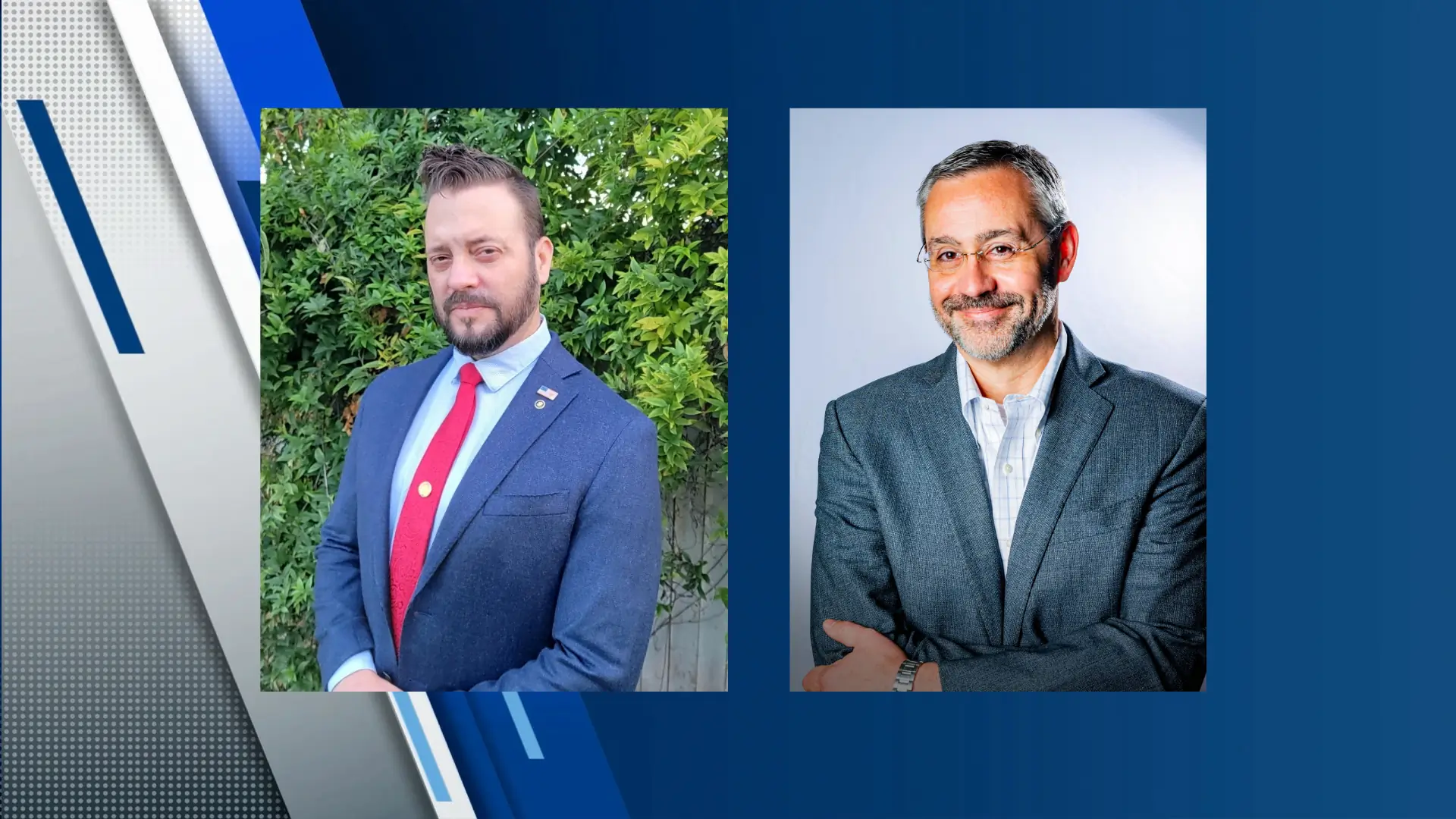
However, on May 4, the city’s outside legal counsel informed the City Attorney’s Office about the discrepancy between the city charter and the Texas Constitution, which states that any office term longer than two years “must be elected by a majority vote (50% of the vote + one vote).”
Later that night, the city reversed course and announced a runoff.
What led to the confusion
While the plurality rule was in effect, the city said last week that every mayoral election since 1995 was won by a candidate who earned the majority vote.
Each February, the City Council approves an ordinance recognizing the state Legislature’s dates for municipal elections, which is typically the first Saturday in May.
In last Friday’s news release, the city acknowledged that the city secretary “discovered that previous ordinances stated the Mayor would be elected by majority and was inconsistent with the City Charter.”
After a discussion with the city attorney, this year’s ordinance was “written to be consistent with the City Charter,” officials said.
“The ordinance (#2026-05) stating that the 2026 Mayoral election would be decided by plurality was approved by City Council on February 9, 2026 as part of the Consent Agenda,” according to the news release.
When the ordinance was approved, the city said Linnartz, City Council and city staff were not aware that New Braunfels’ charter was “in conflict with” the Texas Constitution.
‘We must follow the law’
Acevedo, who had served as New Braunfels’ city attorney since November 2011, spoke to the council and residents during the Monday meeting.
“In New Braunfels, for the last 31 years, the mayor has been elected under the understanding that it was ‘plurality,’” Acevedo told the council. “‘Why those ordinances have said, ‘majority’? Nobody knows.”
Acevedo counted herself among those at City Hall who had no knowledge of the city charter-Texas Constitution conflict.
“I did not know there was such restriction on the City of New Braunfels due to our (mayoral) term limits being longer than two years,” Acevedo said. “Again, as stated in the May 4th press release, I learned of the conflict by that phone call — that phone call that’s changed, seemingly, my life, and the life of many other good, hardworking people.”
Despite the error, Acevedo insisted that the city continue forward with a runoff election.
“We must follow the law. I am duty-bound, as I was then, to tell you that is the law,” Acevedo said. “And we must follow it.”
Acevedo requested that any decision made on her job status be done in public as opposed to a closed-door executive session.
When the vote was held, the first six votes were split down the middle: three votes in favor of firing Acevedo, and three votes opposing her termination.
Linnartz, who served as the tiebreaking voter on the council, was the fourth and final “yea” vote.
In a social media post early Tuesday morning, District 4 Councilman Lawrence W. Spradley said the election error happened because of “complacency.”
“Never take anything for granted and question abnormalities. In this case, she (Acevedo) had many small issues that should have been enough to raise questions & resolved with a simple phone call to outside counsel,” Spradley said. “She fell back on that it’s been this way for 30 years and nothing was questioned. Well, I guess it was just lucky nothing happened until now.”
“This decision was not an easy one, nor was it about personalities, (Val is a wonderful person) or politics just for politics’ sake,” Spradley continued. “It is truly only about accountability, transparency, and restoring public confidence after this complete unacceptable breakdown in the matter of our elections.”
What’s next
French and Linnartz are headed to a runoff. During the same meeting, council members decided that the mayoral runoff will be held on June 13.
In the aftermath of Acevedo’s firing, an interim city attorney has not yet been appointed.
Because city attorney is a position overseen by City Council, a city spokesperson told KSAT that any future item related to the role “will need to be addressed at a future City Council meeting.”
More coverage of this story on KSAT:
