
NASHVILLE, Tenn. – Four Memphis residents are suing U.S. and Tennessee officials, saying they have been harassed, arrested and physically mistreated for engaging in activities protected by the First Amendment such as observing and recording law enforcement agents in their city.
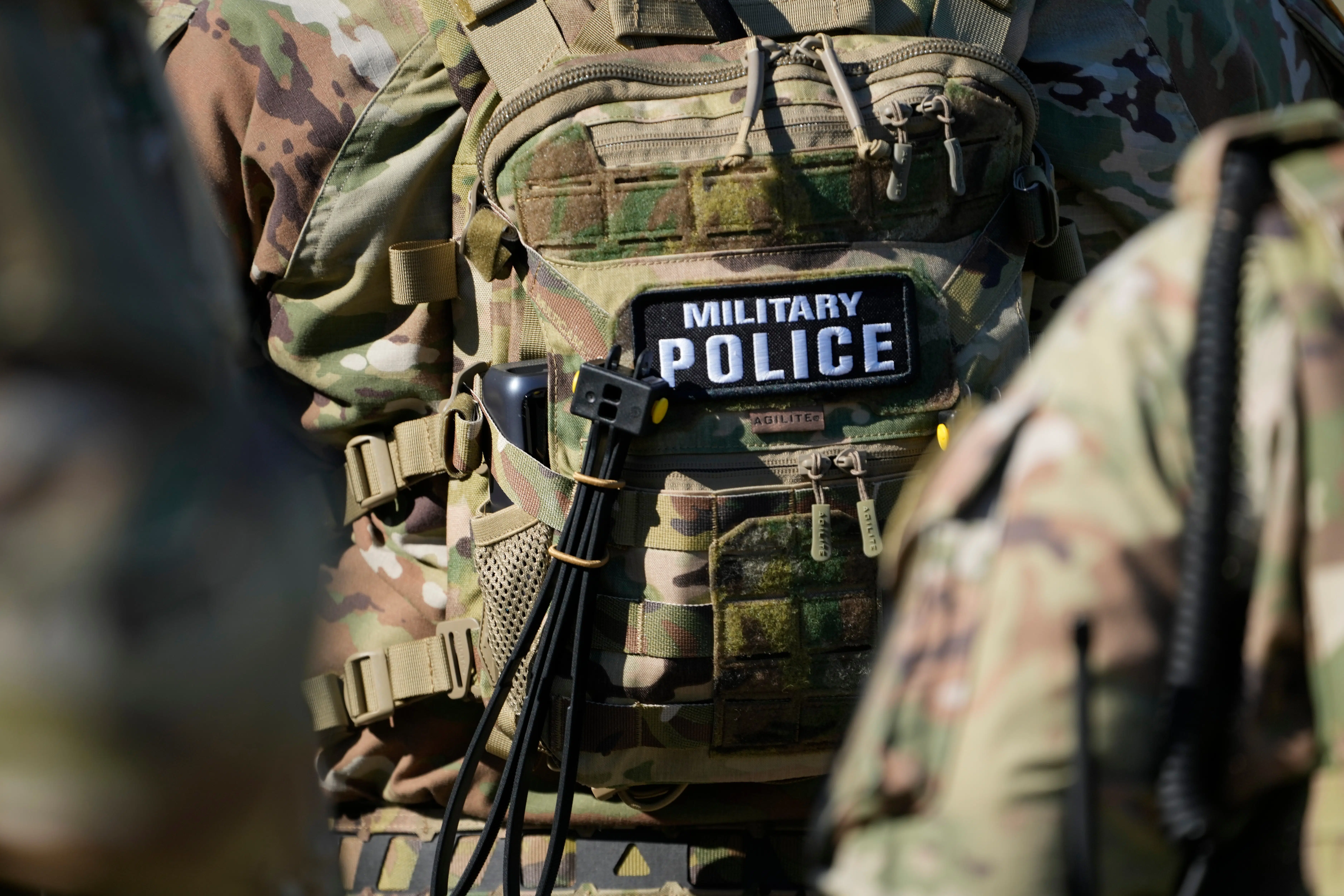
A lawsuit filed Wednesday in federal court targets the Memphis Safe Task Force, comprising agents from 13 federal agencies that President Donald Trump ordered to the city to fight crime alongside Tennessee State Troopers and the Tennessee National Guard.
Recommended Videos
Since late September, hundreds of federal, state and local law enforcement personnel tied to the task force have made traffic stops, served warrants and searched for fugitives in the majority Black city of about 610,000 people. The lawsuit says the task force has conducted over 120,000 traffic stops.
"In the professed name of crime control, Task Force agents have stopped, menaced, and arrested Memphians engaging in routine, day-to-day activities,” the lawsuit states. “In response, Memphians encountering Task Force agents in public, including Plaintiffs, have stopped to gather information about and record Task Force activities.”
The U.S. Department of Justice released a statement on Wednesday in response to the lawsuit.
“In eight months, the Memphis Safe Task Force has made over 9,000 arrests, including 951 known gang members, and located 150 missing children, drastically increasing public safety in the Memphis community. The Department will not tolerate any action that puts our law enforcement officers at risk. We strongly disagree with the allegations in the lawsuit and remain committed to fair, impartial, and professional law enforcement practices to keep Memphians and the American people safe.”
Hunter Demster, a Memphis resident and plaintiff, says he regularly sees the task force stopping cars in his neighborhood, which has a large Hispanic population. In one interaction, he was surrounded by task force agents after he filmed a traffic stop and told the people in the car that they had a right not to speak to police.
“It is a terrifying feeling," Demster said. “I did nothing illegal. I used my First Amendment protected rights to hold up a phone and say some ‘know your rights’ information.”
Scarlet Kim, senior staff attorney with the American Civil Liberty Union’s Speech, Privacy, and Technology Project, said the Tennessee law is written so broadly that officers have wide discretion to invoke it against observers even when the observers are not impeding their actions.
“When observers go to the scene of task force activity and they are observing, they’re gathering information," Kim said. “They are picking up their phones and cameras and documenting what’s happening. That’s all core protected First Amendment activity. And it’s not a basis for the government to essentially react in the way that they’re reacting.”
Federal officials including Defense Secretary Pete Hegseth, former Attorney General Pam Bondi and White House Deputy Chief of Staff Stephen Miller, have visited Memphis to praise the task force. Miller in October predicted the surge in law enforcement would make the city “safer than any of you could ever possibly imagine” and that “businesses and investment are going to pour in, and Memphis will be richer than ever before.”
The task force is part of a larger effort by Trump to use National Guard troops and surge federal law enforcement in cities, particularly ones controlled by Democrats. Following troop deployments in the District of Columbia and Los Angeles, he referred to Portland, Oregon, as “war-ravaged” and threatened apocalyptic force in Chicago. Speaking last year to U.S. military leaders in Virginia, Trump proposed using cities as training grounds for the armed forces.
The lawsuit accuses task force agents of systematically retaliating against the four plaintiffs and other members of the public engaged in similar observations. It claims the threats and harassment are the “direct result of federal policy” that views observing federal agents performing their duties in public as a threat of harm to those agents. The lawsuit also claims that federal and state officials have failed to train their agents not to retaliate against citizens engaged in activities protected by the First Amendment.
The lawsuit asks the court to declare that retaliation against the plaintiffs for observing and recording law enforcement activity is unconstitutional and to prohibit the agents from further retaliation. It also targets a Tennessee law that requires observers to stand at least 25 feet (7.6 meters) away from law enforcement officers, if they are warned to do so, or face arrest. The suit asks the court to declare unconstitutional the use of the “Halo Law” against defendants who are not interfering with agents or impeding their duties.