
GATESVILLE, Texas – The woman infamous for spitting bars about San Antonio has spent the last decade behind them, and soon she’ll be released on parole.
Some have embraced the untitled, polarizing track as San Antonio’s unofficial anthem.
It’s catchy “where we roll, where we roll” lyric remains plastered across social media platforms.
The woman behind the song, Phyllis Sentiva Ochoa, is just as provocative.
KSAT Investigates traveled to the Hilltop Unit in Gatesville, Texas, for an interview with Ochoa to talk about the viral song, the decisions that led to her imprisonment, and her plans once she’s released on parole.

Hard-hitting journalism from the KSAT Investigates team delivered straight to your inbox.
Viral song, troubled past
The hook is hard to escape. While the profanity-laced earworm dedicated to the Alamo City came out over a decade ago, the chorus has blown up on social media over the last few months.
The song has been played at Spurs games, used as the soundtrack to misfortune on San Antonio’s streets, and defines what Ochoa describes as the worst part of her life.
“I don’t want to lie,” the 35-year-old told KSAT’s Daniela Ibarra. “I’m tired of making excuses. I just want to be real.”
Ochoa was born in California, but moved to San Antonio’s West Side to live with her grandparents in her early teens, after her parents were sent to prison.
In her late teens, Ochoa had a son. She said she then entered a five-year long relationship that turned violent.
“But when I had finally had enough is when he kicked me in the face,” said Ochoa. “I ran away that night and I got my son and I ran away and I took my son to go live with his dad. And that night, I had nowhere to go, so I slept in a park."
Ochoa, who had worked in fast food restaurants, said she reached out to a friend who encouraged her to become a stripper.
“When I went to go dance at the strip clubs, I’m not even gonna lie to you, like in that moment when I was dancing, I felt pretty,” Ochoa recalled. “I felt like seen maybe, and it’s awful to say because it’s like, you know, how could you put yourself out there like that and feel beautiful when you’re like half-naked."
Ochoa said she relied on money from stripping and government assistance to survive. She says the lifestyle led to to drinking, hard drugs, then prostitution.
“I hated it, but I didn’t know what else to do,” said Ochoa.
From spitting bars to behind bars
In 2015, Bexar County court records show Ochoa’s rap sheet began to grow, with six charges filed against her -- most of them felonies.
She was convicted in 2016 on charges of aggravated robbery and human trafficking of a minor. Ochoa was sentenced to 16 years in prison, records show.
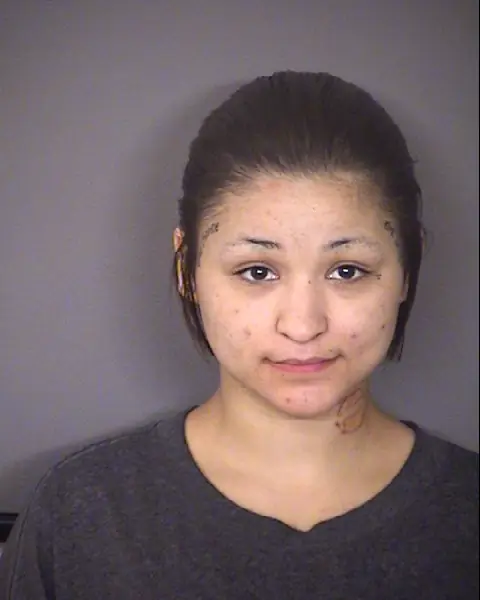
“I want to take accountability and responsibility. I have a son, and I owe him that much, and to my victims as well," she said.
Ochoa admitted to stealing from clients while she was a prostitute. She also claims the victim of the aggravated robbery charge is a man who hired her for sex, but did not pay her.
“He came over and my friends beat him up or whatever, and we robbed him,” she said.
As for the human trafficking charge, she said that stemmed from her introducing other women into prostitution.
“I would always flash my money and things like that so they knew, and they were like, ‘dang girl, I wanna make money like that, too,’” Ochoa said. “I thought that I was helping and that’s where my mind was messed up.”
Ochoa said she did not know one of the girls she pulled into prostitution was 16.
“Instead of me getting her real help and being a good example, I showed her what was shown to me,” said Ochoa. “I believe like me sitting here in prison, it’s fair, and it’s just for the things that I’ve done."
‘Where we roll, where we roll’
Ochoa is now owning all chapters of her story, even the song she says embarrasses her.
Ochoa, also known as PMuney, said she dropped the infamous track around 2015 while on the run in Arizona for the charges she’s now incarcerated for.
“I was so bored, and I was like, ‘I miss my city so I’m about to drop a hook about San Antonio and let everybody know that I love them,’” she said. “I didn’t know that it was going to be a big thing.”
That moment of boredom blew up on social media a decade later. On YouTube alone, the song has been seen about half a million times.
“It started off a ratchet thing, let’s just be real,” Ochoa admitted. “I was ratchet, I know that, you know, I’m aware.”
KSAT Investigates reporter Daniela Ibarra asked Ochoa about the infamous video of her seated on a chair, swiveling from side to side while singing the song.
“I’m just real over the top,” Ochoa said, who called the clip funny.
“My mom wanted to sell that chair by the way,” she said.
Online, there’s been debate over the correct lyrics to Ochoa’s freestyle.
“Is it where we roll or where we roam?” asked Ibarra.
“Where we roll,” Ochoa clarified. “I didn’t know the extent of how popular the song was.”
Online, people have strong opinions about the track, but some have embraced it to poke fun at the Alamo City.
“People say that it’s Puro San Antonio,” said Ibarra.
“Okay, I think it’s really cool,” said Ochoa.
She said she’s been able to see some of the memes about her, and has heard about the song being played by mariachis at restaurants.
Over the years, Ochoa said she’s been recognized by fellow inmates and prison staff at the women‘s-only facility. She’s also gotten fan mail, and even a few offers from record labels.
“Do you get any royalties for the song at all?” Ibarra asked.
“No, I don’t,” Ochoa replied.
While the popularity has grown, Ochoa’s memory of her own melody is fading.
“I don’t even know if I got the beat right,” Ochoa said after singing the track in front of KSAT’s cameras.
Plans after prison
Prison guards told KSAT Investigates Ochoa has had good behavior during her incarceration. They said Ochoa has painted murals at the prison and been involved with several activities.
After a decade of incarceration, Ochoa is set to be released on parole this summer. Records from the Texas Department of Criminal Justice (TDCJ) show that could happen as early as June 2026.
Because Ochoa is convicted of human trafficking of a minor, Texas law required her to register as a sex offender. TDCJ records show she is currently in a sex offender education program.
“What are your plans once you’re out of prison?” asked Ibarra.
“I think when I get out I just want to kind of like live for a second,” Ochoa replied. “I want to try to reconcile with my son, with my family.”
She said she has not had any contact with her son, who is now in his late teens, during her time in prison.
“I would want him to know that I love him and I haven’t forgot about him and that he has been my motivation,” Ochoa said.
She has been studying to get her driver’s license, get a job, and eventually return to San Antonio.
Ochoa said she hopes to help other women who’ve survived what she has. She told KSAT Investigates she agreed to the interview to help amplify domestic violence understanding and human trafficking resources.
“My really big, like heart goal is to like really like put an awareness out there for like women who are in abusive relationships, stuck into prostitution, drugs and stuff like that," she said.
It’s why she’s now reclaiming the infamous viral track as her victory cry.
“I want people to be like, wow, you know, like she’s really like turning it around and she’s not that ratchet girl that was like spinning in that chair,” Ochoa said. “Like she’s totally somebody different and who she is is beautiful.”
Resources
If you or someone you know is dealing with domestic violence, there is help for you. KSAT has a list of resources on its Domestic Violence webpage, which also explains how to identify different types of abuse.
If it’s an emergency, text or call 911. For wrap-around services including the Battered Women and Children’s Shelter, call Family Violence Prevention Services at (210) 733-8810.
You can also contact the Bexar County Family Justice Center, which also provides wrap-around services at (210) 631-0100.
If you or someone you know is a victim of human trafficking, there is help for you.
If it’s an emergency, text or call 911. The National Human Trafficking Resource Center can help find you local assistance by calling (888) 373-7888 or texting ”HELP" or “INFO” to the number 233733 for discreet help.
Read more reporting on the KSAT Investigates page.

