

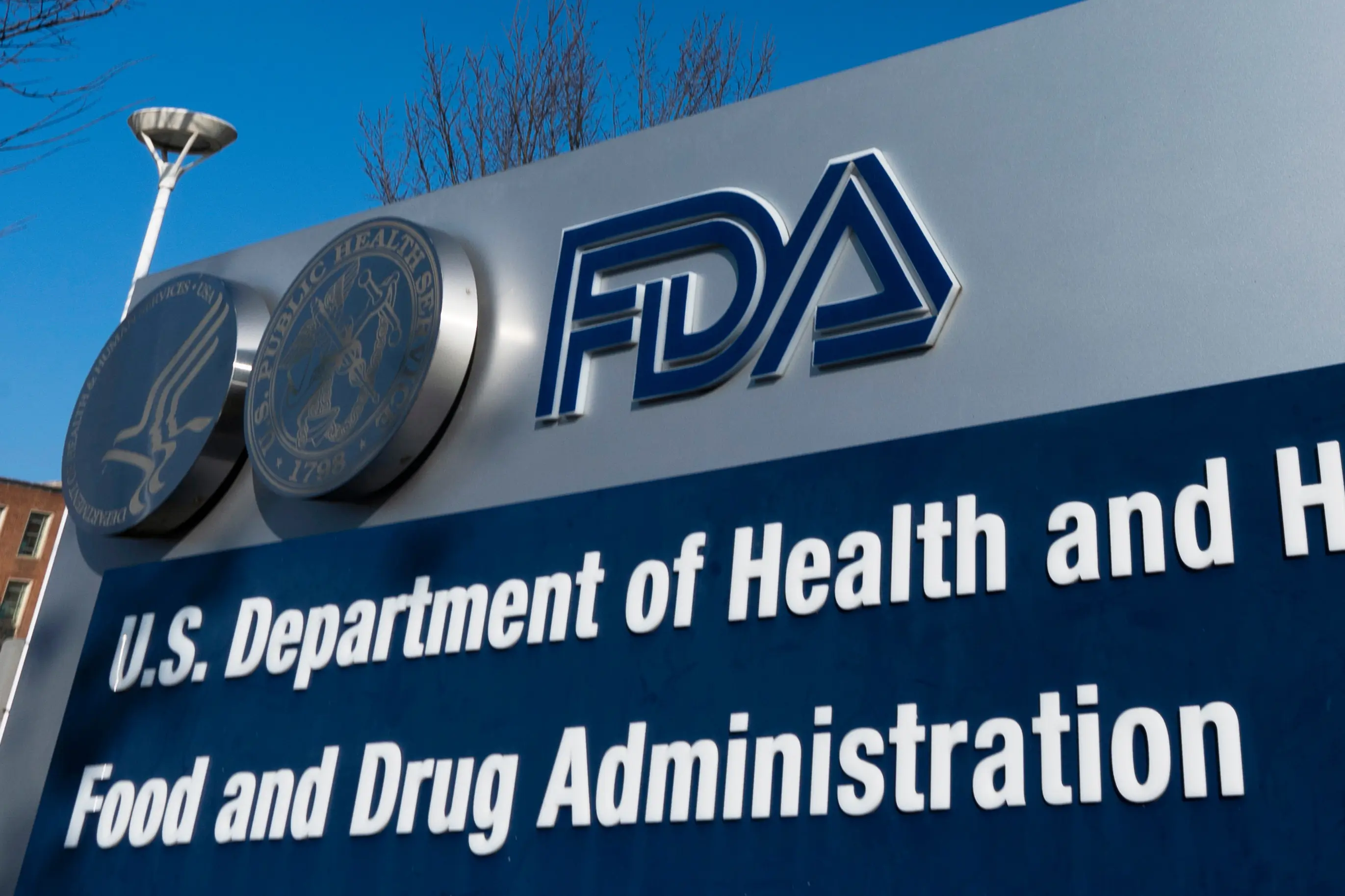
WASHINGTON – The Food and Drug Administration will hold a meeting this summer to consider easing restrictions on more than a half dozen peptide injections, a group of unapproved therapies that have become popular among wellness influencers, fitness gurus and celebrities.
The meeting announcement Wednesday follows repeated pledges by Health Secretary Robert F. Kennedy Jr. to loosen regulations on peptides, which are often pitched as a quick way to build muscle, heal injuries or appear younger. There's little research behind those claims and most peptides have not been reviewed for safety by the FDA.
Recommended Videos
Kennedy has discussed using peptides for his own injuries. And some major supporters of his Make America Healthy Again movement are big proponents of them, including Gary Brecka, a self-described “longevity expert" who sells various peptide formulas through his website.
The FDA said in a federal notice Wednesday it will ask a panel of outside advisers to review seven peptides at a meeting in July, specifically whether they should be added to a list of substances that can be safely produced by pharmacies. In the meantime, the agency said it would soon remove the chemicals from a restrictive list reserved for unapproved, high-risk drugs. The peptides under discussion include some of the most popular among influencers, such as BPC-157, which is marketed to heal injuries and reduce inflammation.
“The Wild West is about to become wilder,” said Dr. Peter Lurie, a former FDA official who now leads the Center for Science in the Public Interest. In an interview, Lurie said allowing peptides on the market without clinical testing poses a “profound threat” to FDA's decades-old system for vetting drugs.
“I don’t see why one would take the path of a proper drug approval if there is now this less rigorous, alternative path to market,” he said.
Under President Joe Biden, the FDA added nearly 20 peptides to the federal list of substances that should not be produced by compounding pharmacies — businesses that mix medications that aren't available from drugmakers.
At the time, the FDA's panel of pharmacy advisers voted overwhelmingly that the peptides did not meet the criteria for substances that can be safely compounded. And FDA regulators agreed, saying later that the substances “present significant safety risks,” because most have not been extensively tested in humans.
Many of the FDA advisers and internal staff who oversaw those decisions no longer work for the agency. The FDA's pharmacy panel currently has a number of vacancies, which Kennedy could fill before the July meeting.
Kennedy previewed Wednesday's move in an interview with podcast host Joe Rogan. Both men have repeatedly spoken about peptides and claimed to have benefited from their use.
RFK Jr. claims personal benefit from peptides
“I’m a big fan of peptides,” Kennedy told Rogan. “I’ve used them myself and with really good effect on a couple of injuries.”
Given Kennedy's statements, Lurie said it was doubtful the drugs would receive real scrutiny from FDA.
“Everybody knows the outcome that the secretary wants,” Lurie said. “I don’t believe for one moment that what’s going on here is an honest investigation of whether these products should be compounded.”
Scott Brunner of the Alliance for Pharmacy Compounding said the coming meeting will be the start of a “protracted process.” Even if the panel votes to make the peptides available, and FDA agrees, the agency will still have to draft and publish rules on the change, he noted.
Peptides are essentially the building blocks of more complex proteins. Inside the human body, peptides trigger hormones needed for growth, metabolism and healing.
In recent years peptides have become widely known through the blockbuster success of GLP-1 medications, which the FDA has approved for treating obesity and diabetes. Other FDA-approved peptides include insulin for diabetics and hormone-based drugs for several medical conditions.
But many of the peptides promoted online have never been approved, making them technically illegal to market as drugs. Several peptides, such as BPC-157 and TB-500, are banned by international sports authorities as doping substances.
But that has not stopped them from gaining a foothold in the burgeoning marketplace for wellness hacks and alternative remedies.
“I think this is a disaster in the works,” said Dr. Eric Topol of Scripps Research Translational Institute, who has studied the issue. “These peptides have no data to support their safety and efficacy.”
Meanwhile, some dietary supplement makers have begun mixing peptides into capsules, protein powders and gummies. At a recent FDA meeting, the industry argued for expanding the federal definition of supplements to permit the use of newer ingredients like peptides in their products.
Safety risks were cited previously
When the FDA added a number of injectable peptides to its list of restricted substances in 2023, it cited safety risks including cancer and liver, kidney and heart problems.
That triggered pushback from wellness entrepreneurs, compounding pharmacies and their allies in Washington.
Last year several members of Congress, including Republican Sen. Tommy Tuberville of Alabama, sent letters to Kennedy asking him to lift limits on peptide production.
Some in the compounding industry argue that FDA's restrictions have given rise to an illicit market of imported chemicals from China and other countries, which are not subject to U.S. drug standards.
Kennedy has echoed those concerns.
“With the gray market you have no idea if you’re getting a good product,” Kennedy told Rogan. “And a lot of this stuff that we’ve looked at is just very, very substandard.”
___
The Associated Press Health and Science Department receives support from the Howard Hughes Medical Institute’s Department of Science Education and the Robert Wood Johnson Foundation. The AP is solely responsible for all content.