
WASHINGTON – President Donald Trump didn't get what he wanted in some of the biggest Supreme Court cases this year: tariffs, birthright citizenship and the attempted firing of Federal Reserve governor Lisa Cook.
But he also emerged from the term with even greater power.
Recommended Videos
His immigration crackdown was largely upheld, his call to redistrict for partisan advantage marched ahead and his ability to control federal regulatory agencies expanded dramatically when the court overturned a 90-year-old precedent. The court's conservative majority also seemed willing to look past Trump’s invocation of racial tropes and boundary-pushing moves as it handed down decisions in line with its own conception of a powerful presidency.
The conservative majority seems fully behind the unitary executive theory
The court's ruling Monday gave the president effective control over independent regulatory agencies by allowing him to fire their leaders at will.
Several federal laws, some more than 100 years old, sought to protect agency independence by requiring the president to identify a cause, like negligence, before firing the leaders. The court struck down those provisions as unconstitutional limits on presidential power.
The decision could give the president the ability to reshape agencies Congress created to operate independently of the executive branch. It also could be a threat to the federal workforce, well below top executives, that has been covered by the civil service system, if future decisions allow the president to fire lower-level workers.
One agency that still appears beyond Trump's reach is the Federal Reserve. Though many experts have said there is no principled distinction, the court ruled Monday that the Fed's leadership can't be fired at will. It said Cook can remain in her job while she challenges efforts to oust her over allegations of mortgage fraud, which she denies.
The Voting Rights Act has been hollowed out
It was the crown jewel of the Civil Rights Movement: the 1965 federal law that finally opened the ballot box to Black Americans and other minorities and eventually led to the election of thousands of Black officeholders across the country.
But since 2013, the court has systematically and severely cut back on the ability of minority voters to invoke the law's protections to challenge election changes, saying the need for those protections had largely passed.
In April, the court made it much harder for minority voters to challenge electoral districts that result in reduced opportunity to elect candidates of their choosing, unless they can effectively prove intentional racial discrimination.
The decision meshed with Trump's call for Republicans to redraw as many districts as possible to try to hold on to their slim majority in the House.
Alabama, Louisiana and Tennessee eliminated largely Black districts in response to the decision, including an Alabama district that was created in response to a Supreme Court ruling three years ago.
The immigration crackdown has been at the center of Trump's agenda
The Trump administration notched a series of wins on immigration this term: The justices allowed the Department of Homeland Security to end deportation protections for hundreds of thousands of Venezuelans and Haitians and to employ a restrictive policy limiting the number of people seeking asylum each day at the southern border.
They also allowed border officers wider latitude in cases of green-card holders accused of crimes, in a case that started during the Obama administration.
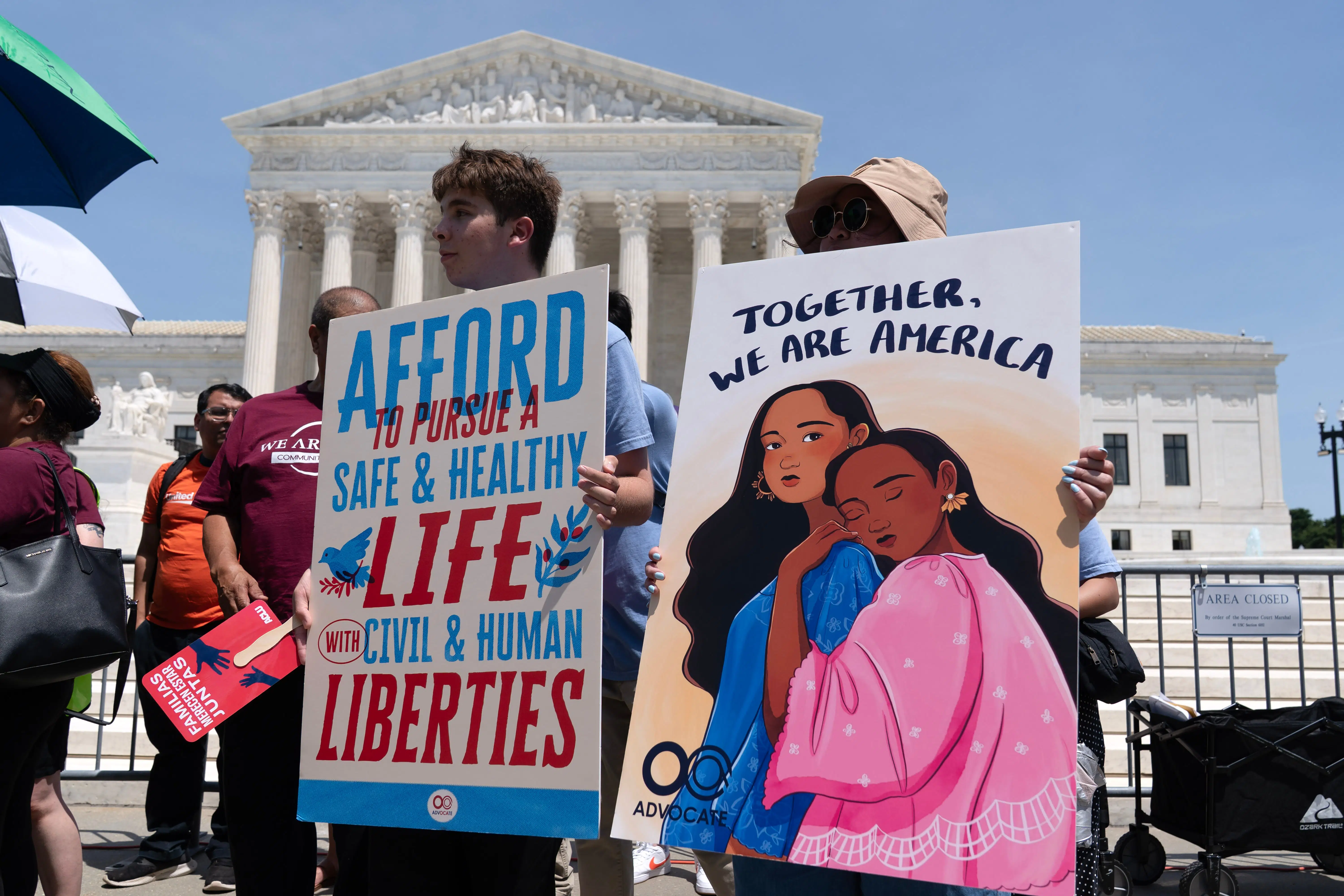
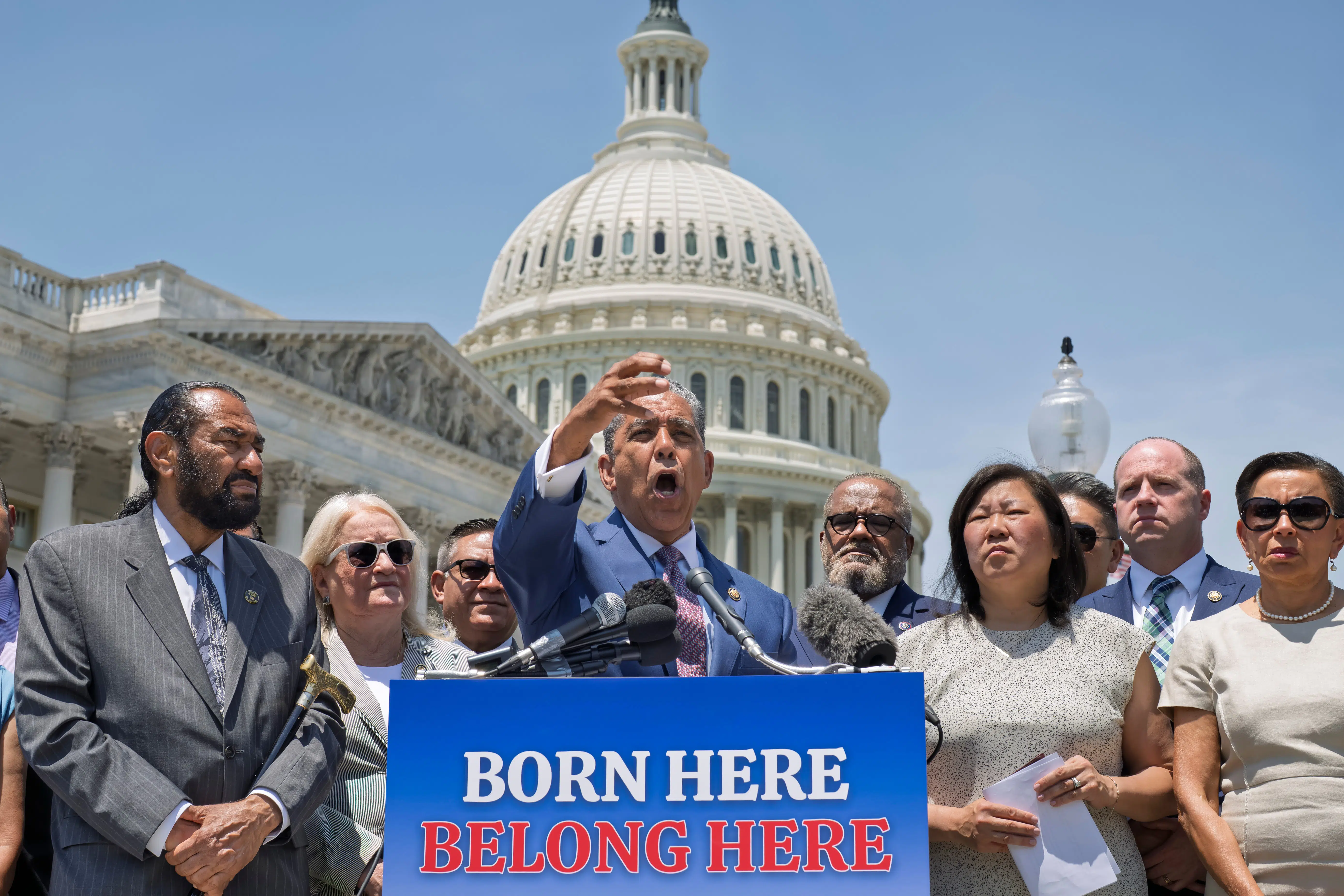
In the birthright citizenship case, Trump pushed for limits no president had sought before, and certainly not through an executive order that would bypass Congress. In the end, six justices ruled he had gone too far.
But four justices adopted the administration's reading of the 14th Amendment that it would permit denying citizenship to children born to parents who are in the country illegally or temporarily.
Trump's crude racial and religious stereotypes get a pass from the court
Conservative justices have repeatedly discounted or taken the best possible view of Trump’s words and actions. Critics call it sanewashing.
In last week's decision stripping protections from Haitian migrants, Justices Samuel Alito and Elena Kagan sparred over the role of race in Trump's statements depicting Haitians as “poisoning our blood” and amplifying false rumors of them eating people's pets in Springfield, Ohio, among other graphic comments.
“None of the cited statements by either the President or the Secretary was overtly racial,” Alito wrote, contending they could have neutral explanations.
Kagan countered: “The statements fairly shout, in their racial undertones and overtones alike, that race entered into the President’s resolve to remove Haitians from this country.”
The findings echo the 2018 travel ban case where Chief Justice John Roberts said Trump's comments about Muslims were beside the point in the court's review of a “Presidential directive, neutral on its face, addressing a matter within the core of executive responsibility.”
Justice Sonia Sotomayor saw things differently. “The full record paints a far more harrowing picture, from which a reasonable observer would readily conclude that the Proclamation was motivated by hostility and animus toward the Muslim faith,” she wrote.
The court also looked past the allegations against Trump when it ruled for him in the 2024 case that helped him avoid prosecution. Two of Trump's appointees, Neil Gorsuch and Brett Kavanaugh, had little interest in discussing Trump's effort to undo the 2020 election results and the Jan. 6, 2021, riot at the Capitol that followed. “We’re writing a rule for the ages," Gorsuch said. Kavanaugh added later: “I’m not focused on the here and now of this case. I’m very concerned about the future."
The court rejected Trump's global tariffs
A six-justice majority of three liberal and three conservative justices ruled in February that an emergency powers law doesn’t let Trump bypass Congress. No president had ever tried the tactic before.
Trump responded to the loss by sharpy criticizing the justices who ruled against him, referring to those he nominated as an “embarrassment to their families.”
Meanwhile, he has continued threatening tariffs under other authorities. And new tariffs he imposed in response to the high-court ruling remain in effect even as they, too, have been challenged.
Gun rights get a modest boost
The justices backed Second Amendment rights in a pair of rulings. One found that people can't be barred from owning firearms just because they regularly use marijuana. While the federal ban wasn't often enforced in broad terms, the court's decision recognized that cannabis is now used by millions of people and said it can't automatically be considered dangerous.
Another decision struck down a Hawaii law that had required people to get permission to carry guns into stores and hotels. A handful of other states have similar laws, some of which have already been blocked in court.
They're the latest in a line of gun cases to reach the court since the justices expanded Second Amendment rights in a landmark 2022 decision.
And a major new case on gun rights is looming. The court also announced Tuesday it will decide whether state and local bans on semiautomatic rifles commonly known as assault weapons violate the Second Amendment.