

SAN ANTONIO – Watching Ian pound the Florida coast brought back memories. Unfortunately, they’re recent memories of covering Harvey and Laura.
Ian is the latest in a string of powerful hurricanes to hit the Gulf Coast since 2017. And while the trend crossed my mind in a general sense, it was a tweet by Ian Livingston of the Washington Post that really laid it out.
Recommended Videos
#HurricaneIan is the sixth Category 4+ to strike the Gulf Coast in as many years. A very crowded family portrait. pic.twitter.com/0Lc9vq49tx
— Ian Livingston (@islivingston) September 28, 2022
That’s a dubious list.
We of course remember Harvey very well.
But, Laura, Ida, Michael, Ian, and Irma all left behind large swaths of damage for those east of us. Each one of those hurricanes had maximum sustained winds of 130 mph or higher at landfall.
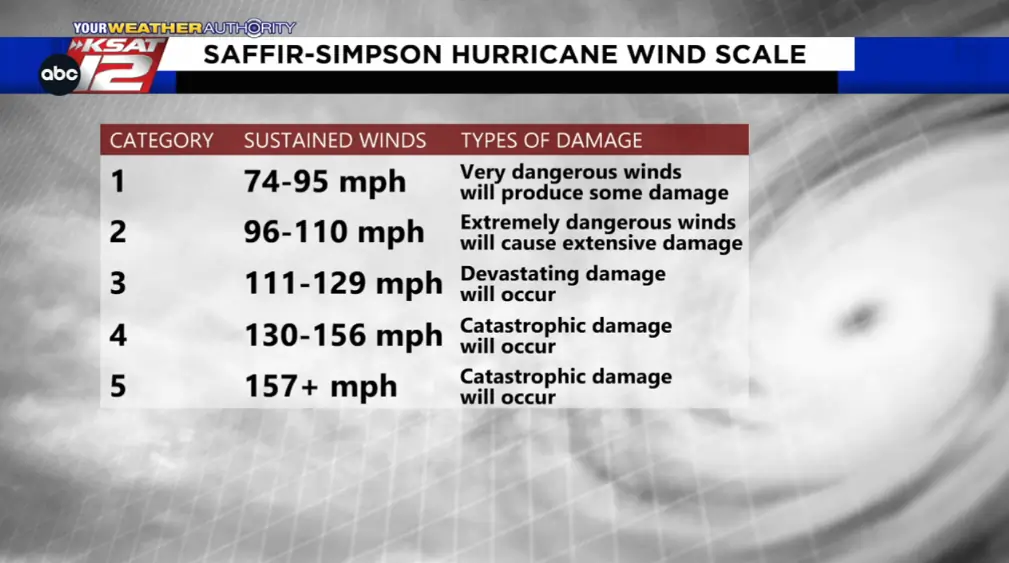
I know what you’re thinking... “Oh no, now he’s going to talk about climate change.”
Or conversely: “It’s climate change! Why aren’t you talking about climate change!”
Needless to say, it’s a divisive topic. As meteorologists, we strive to be data-driven, not emotionally charged.
The fact is, data tells us the earth is warming. The oceans are also warming and hurricanes, in general, are getting stronger.
With that being said, you also can’t draw conclusions from one storm.
Jamie Rhome, acting director of NOAA, said it eloquently when interviewed by CNN on Wednesday.
“I don’t think you can link climate change to any one event. On the whole, on the cumulative, climate change may be making storms worse, but to link it to any one event, I would caution against that,” Rhome said. “We can come back and talk about climate change at a later time, I want to talk about the here and now,” Rhome said, before providing analysis on Ian.
Rhome after all was in the midst of saving lives during a powerful hurricane.
All of this to say, it’s a nuanced issue.
And to answer the pressing question: Should we be prepared for more powerful hurricanes in the Gulf?
I’d say our odds have increased and we should prepare for that prospect. Data is pointing in that direction.
What is for certain is that it’s been a busy five years and the Gulf Coast has paid the price.
